



 Български
 Čeština
 Deutsch
 Eesti
Eesti
 Español
 Français
 Hrvatski
 Italiano
 Latviešu
 Lietuvių
 Magyar
 Nederlands
 Norsk
Norsk
 Polski
 Português
 Română
 Русский
 Slovenčina
 Slovenščina

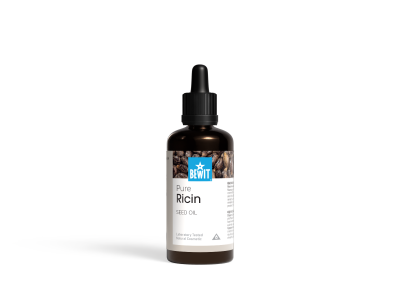
You would be hard-pressed to confuse castor oil with other vegetable oils. It is significantly thicker, spreads more slowly, and even a small amount creates a noticeable layer on the skin or hair.
It is precisely this unusual consistency that makes it an interesting helper for caring for eyelashes, eyebrows, hair, nail cuticles, and dry heels. However, it is good to use it sparingly. Sometimes you can use it on its own, other times it works better in combination with a lighter vegetable oil.
In this article, you will learn:
- What makes castor oil special: where it comes from and why it is thicker than other oils
- How to choose: the difference between organic and conventional varieties and how to recognise quality oil
- What it is good for: from eyelashes and eyebrows to hair, nails, and dry skin
- How to use it: how much is enough, when to use it alone, and when to combine it with a lighter oil
And at the end of the article, you will find two practical recipes for home use: a hair wrap, and a treatment for nails and cuticles.
What is castor oil and where does it come from
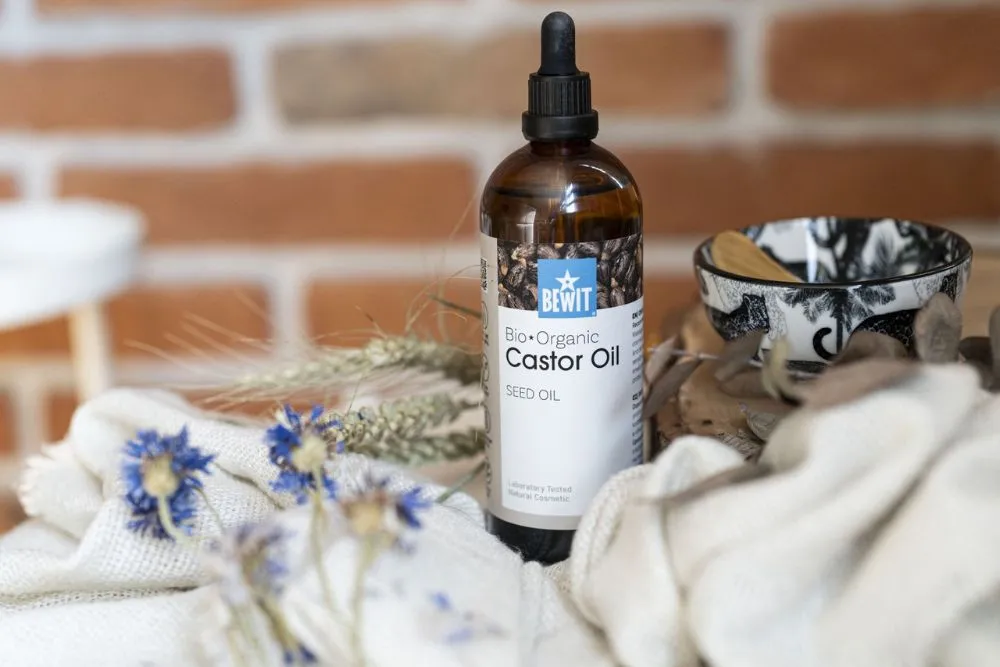
Castor oil is obtained by pressing the seeds of the castor bean plant (Ricinus communis), a tropical plant cultivated mainly in India. Although castor seeds contain toxic ricin, it is not transferred to the oil component, so properly processed castor oil does not contain it. In cosmetics, it is particularly interesting due to its unusual composition and very thick consistency.
Why castor oil is thicker than other oils
This is the first thing you will notice when you open the bottle: castor oil is indeed very thick. It spreads slowly and remains on the skin noticeably longer than almond or argan oil. Some people even find it sticky.
Its consistency is primarily due to ricinoleic acid, which makes up approximately 85–90% of its fatty acid profile. It is unusual in that it contains a hydroxyl group, which allows hydrogen bonds to form between molecules. These can contribute to the exceptionally high viscosity of castor oil.
How high is this viscosity actually? In one published comparison, castor oil even showed a higher viscosity than standard SAE 40 motor oil.
Its reputation as one of the thickest commonly used vegetable oils is therefore not exaggerated. And it's good to keep that in mind before generously applying it to your entire face.
How to recognise quality castor oil
With castor oil, it is useful to look at several specific pieces of information, such as the processing method and composition, which will tell you what you are actually buying:
- Cold-pressed. If you are looking for a minimally processed oil, opt for one that has been cold-pressed. In this process, the oil is obtained only by gentle mechanical separation.
- Single-ingredient composition. For pure castor oil, you will find only one item in the ingredients list: Ricinus Communis Seed Oil.
- Scent and colour. Natural castor oil is typically almost colourless to pale yellow and has a very subtle or almost neutral scent.
- Organic. The difference between organic and conventional castor oil lies mainly in the cultivation of the castor plant and its processing without the use of artificial fertilisers or pesticides. If you prefer oil from organically grown raw materials, look for specific and traceable certification.

What is castor oil used for?
Castor oil is primarily used where you want to lubricate skin or hair, add suppleness and protect them from drying out.
Eyelashes and eyebrows
For eyelashes and eyebrows, it is used as a conditioning oil for a smoother, tidier and optically fuller appearance.
Hair and scalp
For hair, castor oil is particularly suitable for more intensive oil treatments. It helps to smooth the hair surface, promote shine and give dry lengths and ends a soft feel.
Nails and cuticles
Castor oil is also suitable for regular care of the nail area. It helps to soften dry cuticles and also cares for the nail plate itself.
Dry heels, elbows and lips
In areas prone to significant dryness, such as heels, elbows or lips, castor oil helps to nourish the skin and leaves it softer to the touch.
Skin
Castor oil helps to intensely moisturise the skin and reduce the uncomfortable feeling of tightness.
How to use and dilute castor oil
Due to its density, castor oil requires a slightly different application method. Generally, a small amount is sufficient, and if you want to dilute it, combine it with another vegetable oil.
For eyelashes and eyebrows: Apply a small amount, ideally in the evening, to clean eyelashes or eyebrows using a clean brush. For eyelashes, proceed carefully to prevent the oil from getting into the eyes.
For hair: Use castor oil primarily as a pre-wash treatment and always combine it with a lighter oil, such as argan, jojoba or coconut oil. Apply it to the lengths and ends, or a small amount to the scalp, and then rinse thoroughly with shampoo.
Dilution is especially important for hair. A case of significant hair matting after applying an oil treatment with a higher proportion of castor oil has been reported. Its high viscosity likely contributed to the severe tangling. Therefore, in the recipe below, castor oil makes up only one-fifth of the total mixture.
For the body and cuticles: For smaller areas, you can try castor oil on its own. If you want to apply it to a larger area or prefer a lighter consistency, you can mix it with, for example, a gentle almond oil.
For the skin: Start with approximately 5–10% castor oil in the mixture and adjust the proportion according to how you like the resulting consistency. It combines well with, for example, jojoba oil. Before application, use a hydrosol, as the mixture will spread more easily on damp skin.
Try out recipes for homemade cosmetics with castor oil
If you want to try castor oil in practice, start with a simple hair mask or nail and cuticle care.
Both formulations are anhydrous, meaning they are composed only of vegetable oils. Thanks to this, you don't need any preservative. How long the mixture lasts depends on the shelf life of the oils used, so it is advisable to store them away from heat and direct light.

Hair mask for dry and brittle hair
The quantity is for a 50 ml bottle.
Ingredients:
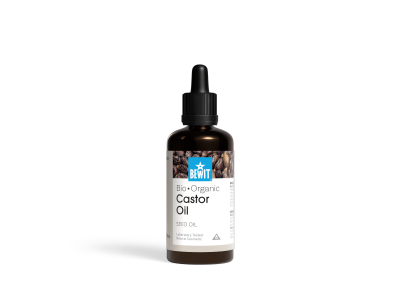
- 10 ml classic castor oil or the organic variant
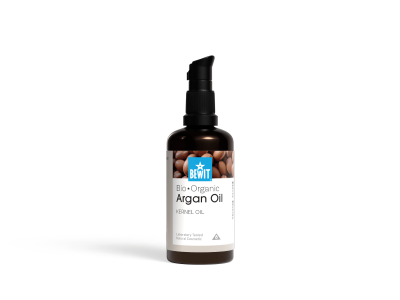
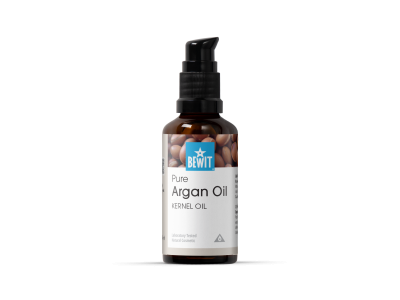
- 15 ml argan oil
- 12.5 ml coconut oil
- 12 ml jojoba oil
- 6 drops lavender essential oil
Method: Mix the oils in the bottle and shake well. Apply to the lengths and ends, and gently massage into the scalp if desired. Leave on and then wash your hair with shampoo.
What it's for: Intensive pre-wash oil treatment for dry, stressed, or brittle hair. It helps to smooth its surface, give it a more supple appearance, and enhance its natural shine.
Why these particular oils: Castor oil makes up only a fifth of the mixture, so its nourishing properties are utilised without the mask feeling too heavy or greasy. Argan oil provides a lighter glide and radiant shine. Meanwhile, coconut oil is a classic for hair care. Jojoba oil lightens the entire mixture, making both application and subsequent rinsing easier.
Nail and cuticle treatment
The quantity is for a 10 ml bottle.
Ingredients:
- 4 ml classic castor oil or organic variant
- 3 ml olive oil
- 2.9 ml almond oil
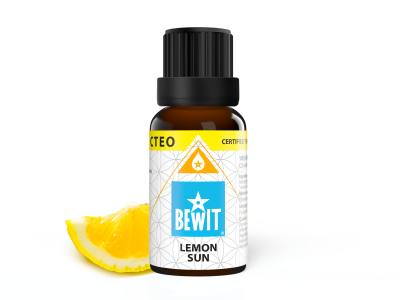
- 1 drop lemon essential oil
Method: Mix, shake, and apply to nails and cuticles. Massage in, ideally in the evening.
Benefits: Regular oil care helps keep dry cuticles supple and nourishes the nail plate. It is particularly suitable for dry and stressed nails prone to splitting and breaking, and helps maintain their well-groomed appearance.
Frequently Asked Questions
What is the difference between organic and classic castor oil?
Both variants are obtained from the seeds of the castor bean plant. The organic label primarily indicates the origin of the raw material and the conditions of its cultivation according to organic farming rules. When choosing, also consider the processing method and a pure, single-ingredient composition.
Does castor oil need to be diluted?
Not always. For smaller dry areas or cuticles, use it undiluted in a small amount. For the face and especially for hair, due to its high viscosity, it is more practical to combine it with a lighter vegetable oil.
Does castor oil contain toxic ricin?
Properly processed castor oil does not contain ricin. Toxic ricin is found in castor seeds, but it is not transferred to the oil component during production.
Can castor oil induce labour?
Castor oil is traditionally recommended as a method for inducing labour. However, scientific studies do not provide clear results, and its internal consumption carries the risk of digestive problems such as nausea or diarrhoea. Therefore, during pregnancy, you should not use it for this purpose without prior consultation with a doctor or midwife.
Sources
Patel, V. R., Dumancas, G. G., Kasi Viswanath, L. C., Maples, R., & Subong, B. J. J. (2016). Castor oil: Properties, uses, and optimisation of processing parameters in commercial production. Lipid Insights, 9, https://doi.org/10.4137/LPI.S40233
Cosmetic Ingredient Review Expert Panel. (2007). Final report on the safety assessment of Ricinus Communis (Castor) Seed Oil, Hydrogenated Castor Oil, Glyceryl Ricinoleate and others. International Journal of Toxicology, 26(Suppl. 3), https://doi.org/10.1080/10915810701663150
V.R.Madur, A.Vedachalam, S.Kiruthika, „Castor oil“: The culprit of acute hair felting. (2017). International Journal of Trichology. https://pmc.ncbi.nlm.nih.gov/articles/PMC5596646/