
 Български
 Čeština
 Deutsch
 Eesti
 Español
 Français
 Hrvatski
 Italiano
 Latviešu
 Lietuvių
 Magyar
 Nederlands
 Norsk
 Polski
 Português
 Română
 Русский
 Slovenčina
 Slovenščina

The human body has an admirable ability to adapt to changes. Every day it reacts to physical exertion, mental strain, and the demands of modern life. But what happens when stress becomes a long-term part of our lives? It is in this context that adaptogens are increasingly being discussed – natural substances that scientists are researching for their possible role in the body's response to stress. Some plants and mushrooms, which are classified as adaptogens, have centuries of traditional use behind them and are now also the subject of modern research.
Let's take a look at what this term means, how adaptogens relate to stress, and what makes their individual representatives interesting.
What are adaptogens and what characterises them?
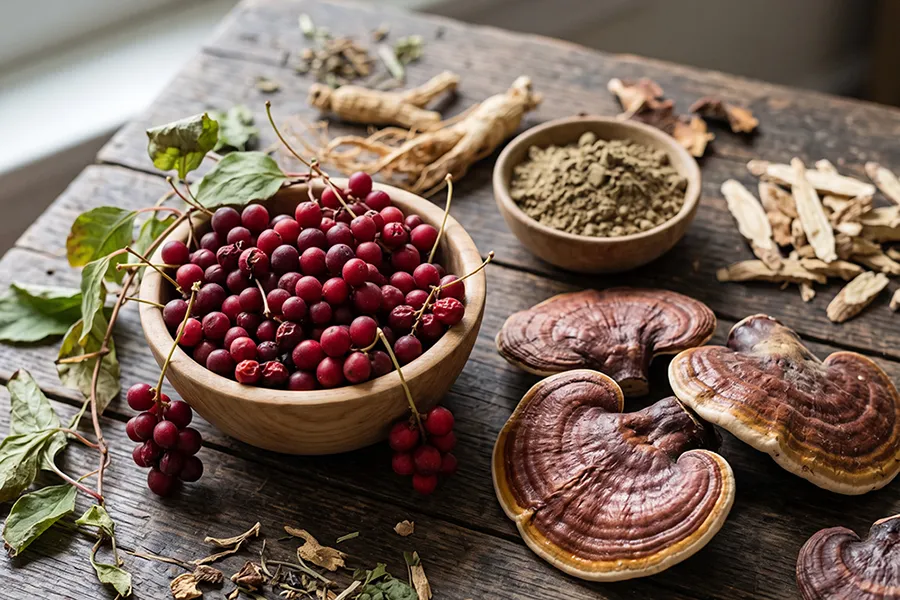
Adaptogens are natural substances, primarily certain herbs and functional mushrooms, which, according to the classical concept, are supposed to support the body's natural ability to adapt to physical and mental stress. Their action is associated with maintaining internal balance, technically called homeostasis. Unlike common stimulants, which provide rapid invigoration, adaptogens are studied for their relationship to the body's natural adaptive processes.
From traditional knowledge to modern science
The name itself comes from the Latin word adaptare, meaning "to adjust", and the Greek root -gen, denoting origin or creation. Although some of these plants have been used in Traditional Chinese Medicine (TCM) and Ayurveda for centuries, the term adaptogen only emerged in 1947. It was introduced by the Soviet scientist Nikolai Lazarev, who researched substances in relation to the body's resistance to adverse conditions.
His work was later continued by scientists Israel Brekhman and Igor Dardymov. In 1969, they formulated three classic criteria for adaptogens:
- Low toxicity. The substance should be well tolerated when used appropriately and not disrupt normal bodily functions.
- Non-specific action. Its presumed effect should not be limited to just one specific type of stress.
- Normalising principle. According to the original definition, it should contribute to restoring the body's internal balance.
These criteria represent a historical scientific framework, not a current official certification or guarantee of efficacy.
The modern term thus encompassed plants and mushrooms known long before its inception. Schisandra chinensis and reishi have their place in TCM, while ashwagandha is inextricably linked with Indian Ayurveda. Today, in addition to their history, their composition and possible mechanisms of action are also being studied.
How do adaptogens and stress relate to each other?
Stress doesn't always have to be bad. We become sharper before an important meeting, we mobilise our strength during sport, and we can react quickly in challenging situations. Our body is naturally prepared for such challenges. But what happens when the tension doesn't subside and there isn't enough room for rest?
What happens in the body during stress?
As soon as the brain evaluates a situation as challenging or threatening, it triggers a stress response. Several changes occur in a short time:
- The brain sends a signal of readiness. It activates nervous and hormonal processes that prepare the body to handle the situation.
- The heart starts beating faster. Breathing quickens, attention increases, and the body mobilises available energy.
- Hormones come into play. Adrenaline contributes to the immediate reaction, while cortisol helps regulate metabolism and energy management.
Short-term stress is a normal part of life and helps us mobilise our strength. However, if the stress persists, it can disrupt the processes that maintain the body's internal balance.
Did you know that cortisol isn't just a stress hormone? It has its natural daily rhythm, participates in a number of important processes, and its level is usually highest in the morning.
Why are adaptogens studied in connection with stress?
It is the body's ability to adapt to stress that underpins the idea of adaptogens. Their classic definition is based on the premise that certain natural substances can influence the body's reaction to various stress stimuli, not only at the hormonal level but also at the cellular level.
Does this mean that all adaptogens work the same way? Not at all. Each plant or mushroom contains different natural compounds, and the scientific evidence of their effects also varies. This is precisely why it is important to get to know individual representatives separately.
One of the most interesting representatives is Chinese schisandra. Its tiny red fruits have a long history in traditional Chinese medicine and hide a remarkable peculiarity. It is not for nothing that they are called fruits of five flavours.
Schisandra, or Chinese magnolia vine: An exceptional plant from the Far East
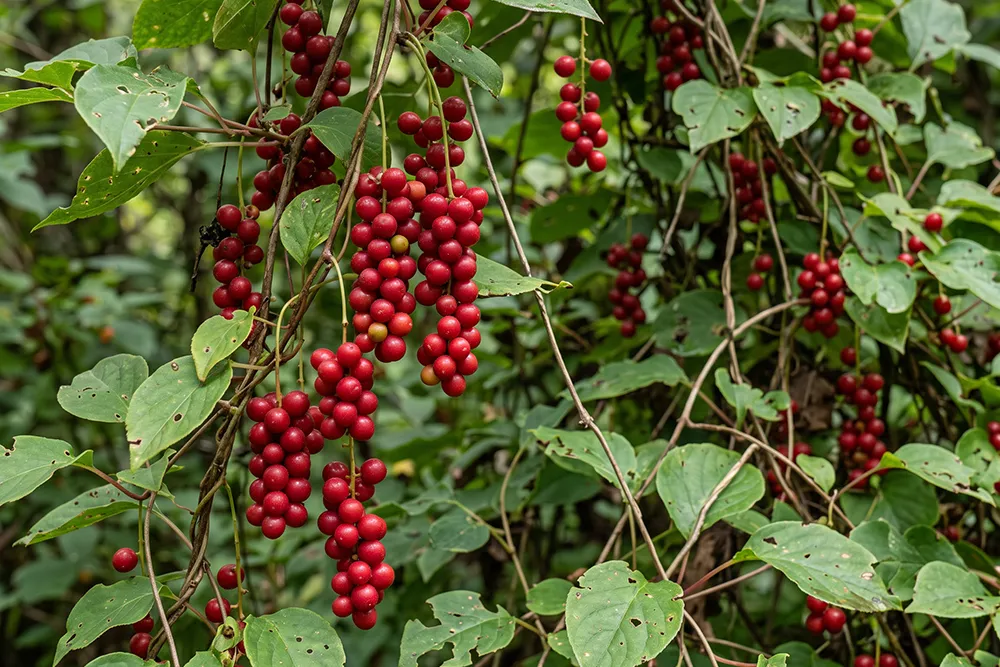
Schisandra (Schisandra chinensis) is a plant with an unusual story. At first glance, an inconspicuous climbing vine transforms into a flood of deep red fruits in autumn. It was these that attracted the attention of traditional Chinese medicine centuries ago and continue to arouse interest among scientists today. What makes them so special?
Five flavours hidden in a single fruit
The peculiarity of schisandra is already captured by its traditional Chinese name Wu Wei Zi, translated as fruit of five flavours. According to traditional descriptions, all five basic flavours meet in the tiny red berries:
- Sweet and sour – attributed primarily to the skin and pulp.
- Bitter and pungent – characteristic especially of the seeds.
- Salty – complements the flavour profile of the entire berry according to traditional concepts.
In traditional Chinese medicine, however, it is not just about an unusual sensory experience. Each of the five flavours has its symbolic meaning and is associated with a certain element and organ system. Schisandra therefore occupies a special position in Chinese herbalism. It is classified among astringent herbs with a warm nature and is traditionally associated primarily with the functional circuits of the Lungs, Kidneys, and Heart.
These terms are based on the holistic concept of TCM and cannot be directly interchanged with the functions of organs as understood by modern medicine.
What have scientists discovered in schisandra fruits?
The magnolia vine has not only captivated with its unusual taste. Its chemical composition, especially lignans, also attracts the attention of scientists. These natural compounds, which include the so-called schisandrins, are found mainly in the seeds and are among the most studied substances of this plant.
Expert studies deal, for example, with their antioxidant properties and possible effects on cellular processes or the metabolism of substances in the liver. Lignans also serve as indicators of the quality of plant extracts, as their content can be determined in the laboratory and compared between individual batches. However, knowledge of their biological effects is still based mainly on laboratory and preclinical studies.
From traditional infusions to modern extracts
There are several ways to use schisandra fruits. In their areas of origin, they were traditionally dried, used to make teas, syrups, or preserved in honey. However, their distinctly sour and astringent taste may not suit everyone.
Today, therefore, we also encounter other forms of processing:
- Ground powder – created by grinding dried fruits and contains their natural components, including fibre.
- Extract – obtained using a suitable solvent that allows selected plant substances to be separated. Its final composition depends on the raw material used and the processing method.
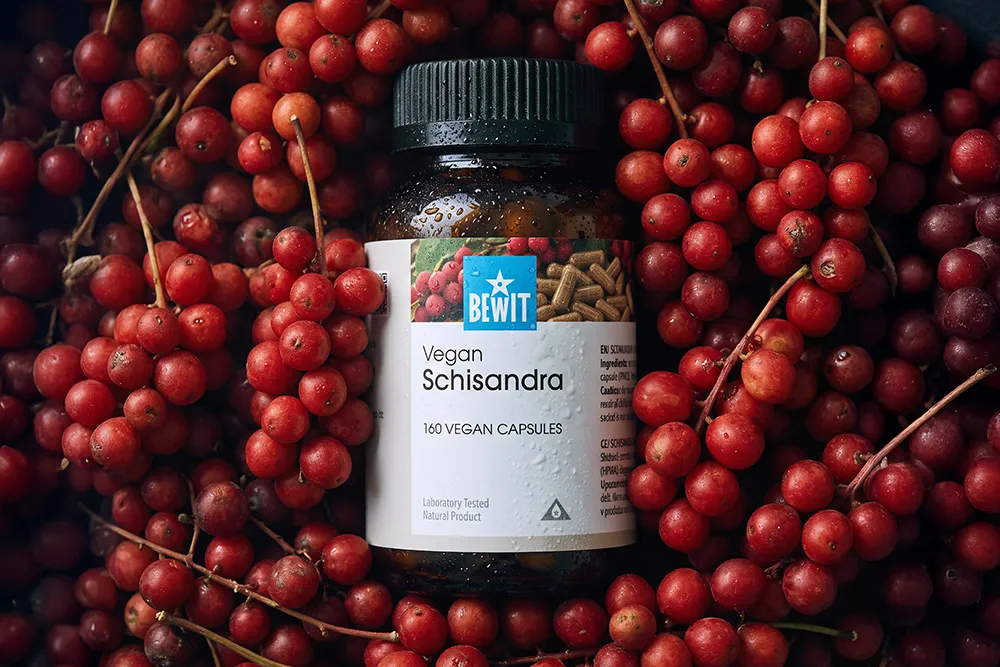
BEWIT Schisandra Chinensis Extract
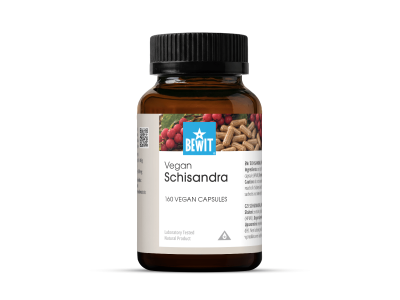
The modern form of this remarkable plant is also represented by BEWIT Schisandra Chinensis Extract. This food supplement contains a concentrated extract of its fruits in practical vegan capsules. This makes it easy to incorporate schisandra into your daily routine without the need to prepare traditional infusions or get used to its distinctive taste. The formula is complemented by organic lavender essential oil Gold Essence.
Things to remember: Schisandra may affect the metabolism of certain medicines. If you are regularly taking medication, consult your doctor or pharmacist beforehand. This product is not intended for children, pregnant or breastfeeding women.
Which other adaptogens are worth discovering?
Besides schisandra, well-known adaptogens also include ashwagandha and the functional mushrooms reishi and cordyceps. Each has its own story, a long history of traditional use, and characteristic natural components that attract the attention of scientists today.
Ashwagandha: A root with a thousand-year Ayurvedic tradition
Ashwagandha (Withania somnifera), also known as Indian ginseng, is a plant primarily known from Indian Ayurveda. You may also encounter it under the name Indian ginseng, although it is not botanically related to true ginseng.
The origin of its name is interesting. In Sanskrit, ashwagandha means "smell of a horse", which refers to the characteristic aroma of the root. In traditional understanding, it is also associated with the symbolism of strength and vitality.
Ayurveda classifies it among the so-called rasayanas, meaning remedies traditionally associated with longevity and life force. Current research focuses mainly on withanolides, specific plant compounds whose biological properties are the subject of scientific studies.
BEWIT Ashwagandha organic RAW powder contains finely ground root of Withania somnifera in certified organic quality. Thanks to its powder form, it can be easily added to smoothies, morning porridge or plant-based milk. It is a practical alternative for those who prefer whole ground plant material over extracts in capsules.
Reishi: The mushroom of immortality shrouded in legends
Reishi, also known as Lingzhi (Ganoderma lucidum), is one of the most famous functional mushrooms in East Asia. In China, it is known as Ling Zhi and due to its significant position in local tradition, it has earned the poetic name mushroom of immortality.
Its appearance alone is captivating. On tree trunks, it forms tough, fan-shaped fruiting bodies with a strikingly glossy surface in reddish-brown hues. Due to its woody consistency and distinctly bitter taste, it is not suitable for regular culinary preparation.
In traditional Chinese medicine, reishi is associated with the principle of An Shen, meaning calming the spirit. Modern science primarily focuses on its chemical composition, especially beta-glucans and triterpenoids, which are characteristic substances of this mushroom.
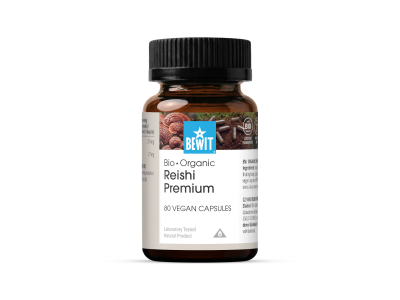
BEWIT Reishi Premium organic contains a concentrated dual extract from the fruiting bodies of Lingzhi with a laboratory-verified content of at least 30% beta-glucans. Plant-based capsules offer a convenient choice compared to preparing traditional decoctions.
Cordyceps: The Secret of a Rare Mushroom from the Himalayas
Chinese caterpillar fungus (Ophiocordyceps sinensis), known as cordyceps, is one of the most remarkable fungi found in the high-altitude regions of the Himalayas and the Tibetan Plateau.
Its life cycle is truly unusual. The fungus infects insect larvae hidden underground, gradually growing through their bodies and, under favourable conditions, forming a slender fruiting body that grows above the surface. This is where the traditional Chinese name Dong Chong Xia Cao comes from, which translates to winter worm, summer grass.
Wild-growing caterpillar fungus is rare today, and its population is primarily threatened by over-harvesting. Therefore, cultivated mycelium, which is fungal mycelium grown under controlled conditions, is also used in modern production. This method allows for the acquisition of raw material without the need to harvest endangered natural populations.
Scientists focus on the composition and biological properties of substances in cordyceps, including beta-glucans, adenosine, and cordycepin.
BEWIT Cordyceps Premium organic offers a dual extract from cultivated mycelium in certified organic quality. It is characterised by a laboratory-verified content of at least 30% beta-glucans. The manufacturer also declares the content of other naturally occurring substances, such as mannitol, adenosine, and cordycepin.

How to navigate the adaptogen market?
When choosing adaptogens, it's not just about the specific plant or mushroom, but also its origin, processing method, and the quality of the final product. So, what should you focus on?
Dual extraction: Why is it used for vital mushrooms?
The cell walls of mushrooms contain chitin, which the human body finds difficult to digest. Therefore, various extraction methods are used to obtain selected natural substances.
Dual extraction combines two procedures:
- Water extraction allows for the extraction of polysaccharides, including beta-glucans.
- Alcohol extraction helps to obtain other compounds, such as certain triterpenoids.
By combining both methods, a wider spectrum of natural substances can be obtained. BEWIT also uses this process when processing reishi and cordyceps.
Why do origin and quality control matter?
Plants and mushrooms absorb substances from their surroundings, so it is important to monitor their origin and cultivation method. When choosing, it is therefore worth paying particular attention to:
- organic certification, which demonstrates compliance with organic production rules.
- Declared content of substances, such as beta-glucans in vital mushrooms.
- Laboratory testing, which verifies selected compositional parameters and checks for the possible presence of undesirable substances.
BEWIT QUALITY, BEWIT's internal standard that sets requirements for product quality and control, also emphasises the quality of raw materials and their processing.
What to consider before use?
Natural origin does not automatically mean that every product is suitable for everyone. Some substances can affect the action of medicines, and individual products have their specific limitations.
Always follow the manufacturer's recommended dosage. If you are regularly taking medication, are pregnant or breastfeeding, or are dealing with health problems, consult a doctor or pharmacist beforehand. For any questions, you can also contact our BEWIT Advisory Medical and Scientific Board, who will be happy to provide an expert perspective on the issue.
Food supplements do not replace a varied and balanced diet or a healthy lifestyle.
What to remember from the article?
- Adaptogens are not the same as stimulants: While caffeine provides a relatively quick boost, adaptogens are being studied for their possible role in the natural processes by which the body responds to stress.
- Stress doesn't always have to be bad: In the short term, it helps us cope with demanding situations. However, long-term overload can disrupt the body's internal balance.
- Schisandra as a plant of five flavours: It holds an exceptional position in traditional Chinese medicine. According to traditional descriptions, its fruits combine all five basic flavours and contain lignans, which attract the attention of scientists.
- With functional mushrooms, processing matters: Dual extraction combines water and alcohol procedures, allowing various groups of natural substances to be obtained, such as beta-glucans and certain triterpenoids.
- Natural origin is not a guarantee of safety: When choosing, check the composition, origin of raw materials, and laboratory testing. It is also important to adhere to the recommended dosage and consider possible interactions with medicines.
Adaptogens in tune with modern times
We live in a time that often demands constant attention, performance, and the ability to react quickly to changes. Yet, adaptability is one of the most remarkable qualities of the human body. It is therefore not surprising that we are increasingly interested in adaptogens and traditional plants that have been associated with this ability for centuries.
However, their story reminds us of something else important. Balance does not mean being able to handle more and more, but also knowing when to slow down and give yourself space to rest. In addition to quality sleep, a varied diet, and natural movement, small daily rituals inspired by traditional herbalism can also have their place.
Whether you are interested in Chinese schisandra with its five-flavour fruits, or you want to explore the secrets of functional mushrooms, in the BEWIT offer you will find adaptogens processed with an emphasis on purity, origin, and gentleness to the human body.
Frequently Asked Questions about Adaptogens (FAQ)
1. What is the difference between adaptogens and stimulants?
Stimulants, such as caffeine, act relatively quickly and temporarily increase alertness. After their effect wears off, fatigue may reappear. Adaptogens, on the other hand, are being studied for their possible influence on the natural processes by which the body responds to physical and mental stress. Therefore, these are not substances from which we should expect the same immediate boost as after a cup of coffee. Their action also differs depending on the specific plant or mushroom.
2. Are all functional mushrooms adaptogens?
Not all functional mushrooms are automatically classified as adaptogens. This designation is commonly associated with, for example, reishi and cordyceps. However, each mushroom contains a different spectrum of natural compounds, and the extent of scientific knowledge about their properties also varies.
3. How long does it take for adaptogens to take effect?
There is no universal answer to this question. It depends on the specific plant or mushroom, the form of the preparation, and the individual characteristics of the person. Study results vary, and for many adaptogens, we do not yet have enough clinical evidence to determine a reliable onset of effects.
4. Can multiple adaptogens be combined at once?
Combining different plants and mushrooms has a long tradition in herbalism, but this does not automatically mean a better result. Individual components can have different properties, and some may affect the effects of medicines. If you are considering taking multiple food supplements simultaneously, consult a doctor or pharmacist beforehand.
5. Are adaptogens suitable for everyone?
No. Natural origin does not automatically guarantee safety for everyone. Some plants and fungi may not be suitable for children, pregnant and breastfeeding women, or individuals taking certain medications. For example, Schisandra chinensis can affect the metabolism of some medicines in the liver. Therefore, always respect the manufacturer's recommendations and any health restrictions.