History
Ashwagandha (Indian Ginseng) has been used in Ayurveda for 3000 years.
Thanks to its effects, it has become a very popular plant, especially in
Southeast Asia and Southern Europe. It is associated with many beneficial
effects. Over its existence, it has acquired various names (nicknames) depending
on the nations. In India, it is associated with the concept of horse-power, and
in China, it is called the root-of-life.
Origin and cultivation
Ashwagandha is a perennial, evergreen herb or shrub. It thrives in
subtropical and tropical regions where it is cultivated. The region of India
therefore provides ideal conditions for its proper growth. The root of the plant
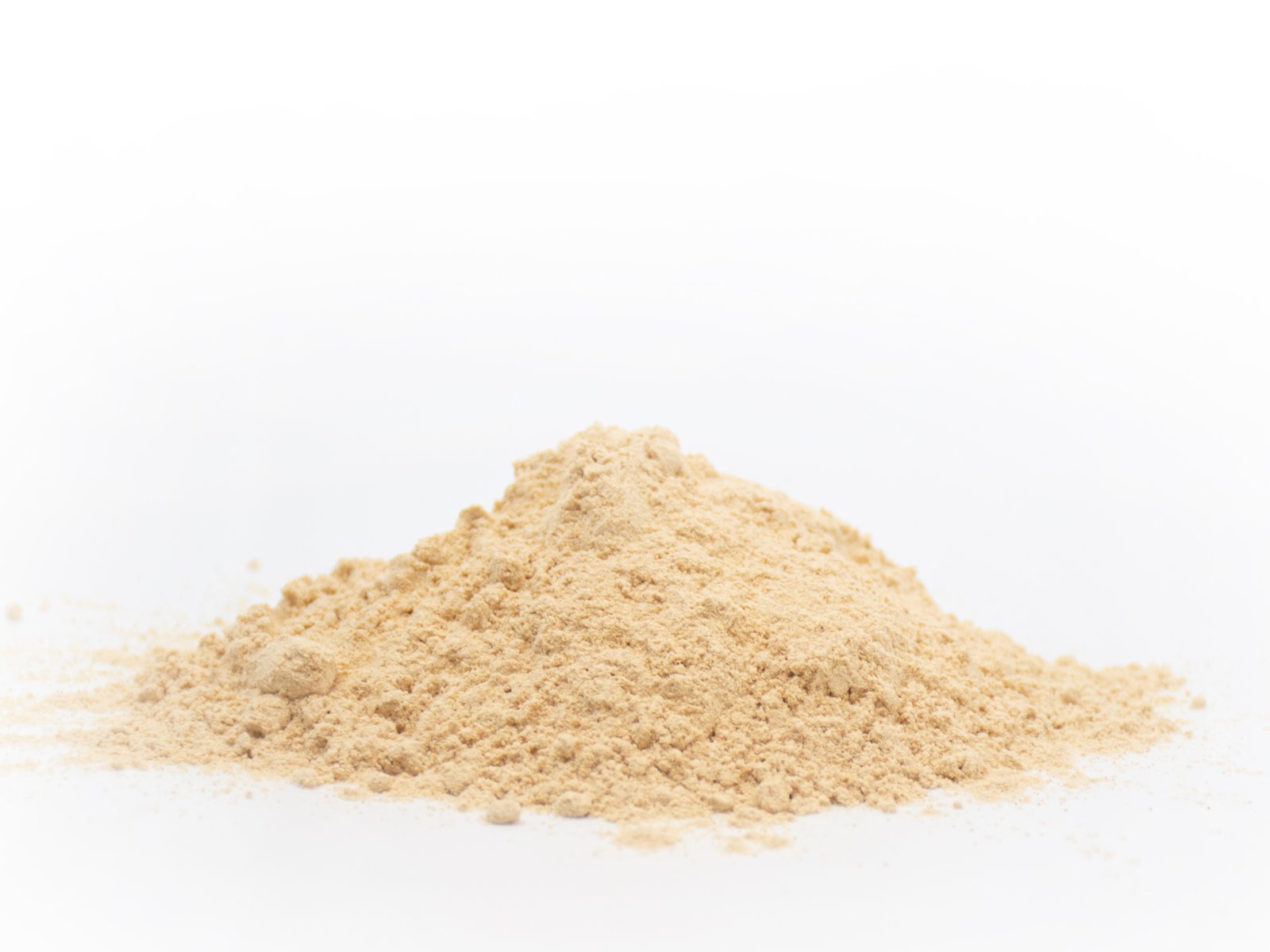
is primarily used, which is dried and ground into the resulting powder after
harvesting.
Recommended dosage
Mix 1 teaspoon (3 grams) daily in water, juice, milk, porridge, smoothie,
cereals or other dishes. Daily intake of Ashwagandha: 3 g.
Warning
- Do not exceed the recommended daily dose.
- The product is not intended as a substitute for a varied and
balanced diet.
- Keep out of reach of children.
- Not suitable for children under 3 years of age, pregnant and
breastfeeding women.
- Store in a dry place, protect from heat.
Packaging
You can choose from two packaging variants:
- in a paper bag, content 300 g
- in a glass bottle, content 80 g
Origin
[country_of_origin]
Sources
[1] PARVINDER, Kaur et al., 2001. A biologically active constituent of
withania somnifera (ashwagandha) with antistress activity. Indian Journal of
Clinical Biochemistry. 16(2), 195–198.
[5] K. KAUSHIK, Mahesh et al., 2017. Triethylene glycol, an active component
of Ashwagandha (Withania somnifera) leaves, is responsible for sleep induction.
PLoS One. 12(2), 1–12.
Health claims from the so-called ON HOLD list:
• Adaptogen
• Mental health and relaxation
• Normal cardiovascular system activity
• Antioxidant
• Energy – vitality – muscles – endurance
• Mental health, stress & sleep
• Rejuvenation
• Normal reproductive system function
• Normal respiratory system function
• Normal skin condition
ON HOLD list – This is a list of substances and their health relationship
that have been submitted to EFSA for assessment, but EFSA has not yet issued a
scientific opinion or the EC has not yet issued a decision. Please note that
these claims are temporary.
Ingredients
Organic Ashwagandha root powder (Withania somnifera)





 Български
 Čeština
 Deutsch
 Eesti
Eesti
 Español
 Français
 Hrvatski
 Italiano
 Latviešu
 Lietuvių
 Magyar
 Nederlands
 Norsk
Norsk
 Polski
 Português
 Română
 Русский
 Slovenčina
 Slovenščina
















 PL (
PL (

 CS (
CS (


 SK (
SK (