AVENTURINE – stone of happiness
Aventurine, like most green stones, evokes a close
connection with nature, with its reviving
energy. Aventurine is a type of quartz recognized for its vibrant
inclusions, which create a shimmering effect
known as ‚aventurescence‘. Aventurescence results from the
presence of chromium-bearing fuchsite, which imparts a silvery green or silvery
blue luster to the crystal. Inclusions of hematite or goethite produce orange
and brown crystals. Aventurine can therefore be found in a variety of colours
such as orange, blue, grey, brown and yellow, but is most commonly green.
Derived from the Italian term ‚a ventura,‘ meaning
chance, aventurine glass—characterised by its small coloured
inclusions of copper—was first accidentally created in the 18th century by an
Italian glassmaker from the island of Murano near Venice.
Deposits abroad: India, Brazil, Colombia, Tanzania, Zimbabwe, Russia,
Austria.
BENEFITS OF AVENTURINE
- From an astrological point of view, it belongs to the signs of
Taurus, Cancer and Sagittarius.
- Cancers, who tend to be prone to fear and
waves of anxiety, and aventurine can help clear these feelings and thought
patterns.
- In the chakra system, it is associated with the
heart chakra.
- It is commonly referred to as the lucky stone, but also as
the „gamblers stone“, as it can often bring good luck in
gambling or competitions.
- It can help reduce clumsiness.
- Promotes gratitude and optimism.
- It can help neutralise geopathic or electromagnetic
stresses.
Stone of Chance
Green aventurine is known as the „stone of chance“. It is considered to
be the luckiest of all crystals and brings good luck in many different forms, be
it financial luck, luck in relationships or simply luck in whatever
one does.
Stone of optimism
Aventurine is also known to help disrupt unhealthy patterns and
habits, promote growth and change. It brings optimism,
creativity, confidence and motivation. It also helps those who
are overcome by obstacles in life, persevere and overcome
obstacles. It is known to have calming vibrations for the mind and
body.
HISTORY
Aventurine was first discovered in the 18th century. Its name comes from the
Italian „ventura“ or „all'avventura“, meaning „by chance“. One day,
a worker accidentally dropped metal filings into a barrel of melting glass. When
the glass cooled, they liked it very much and it was subsequently used to make
jewellery because it had beautiful, random rainbow sparks in it. The name
„aventurine“ was later given to the natural stone because it looked like
this glass.
SPECIFICATION
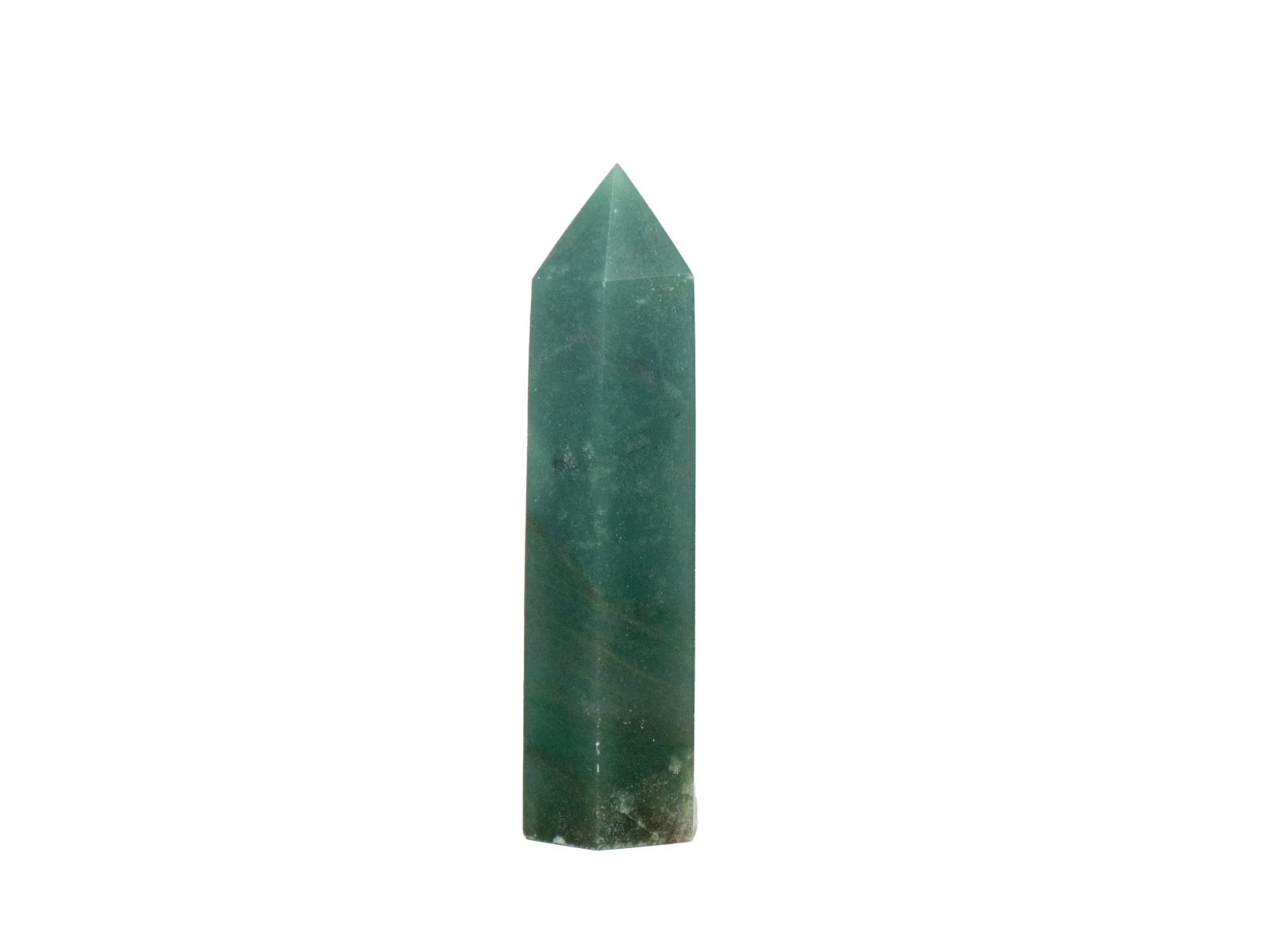
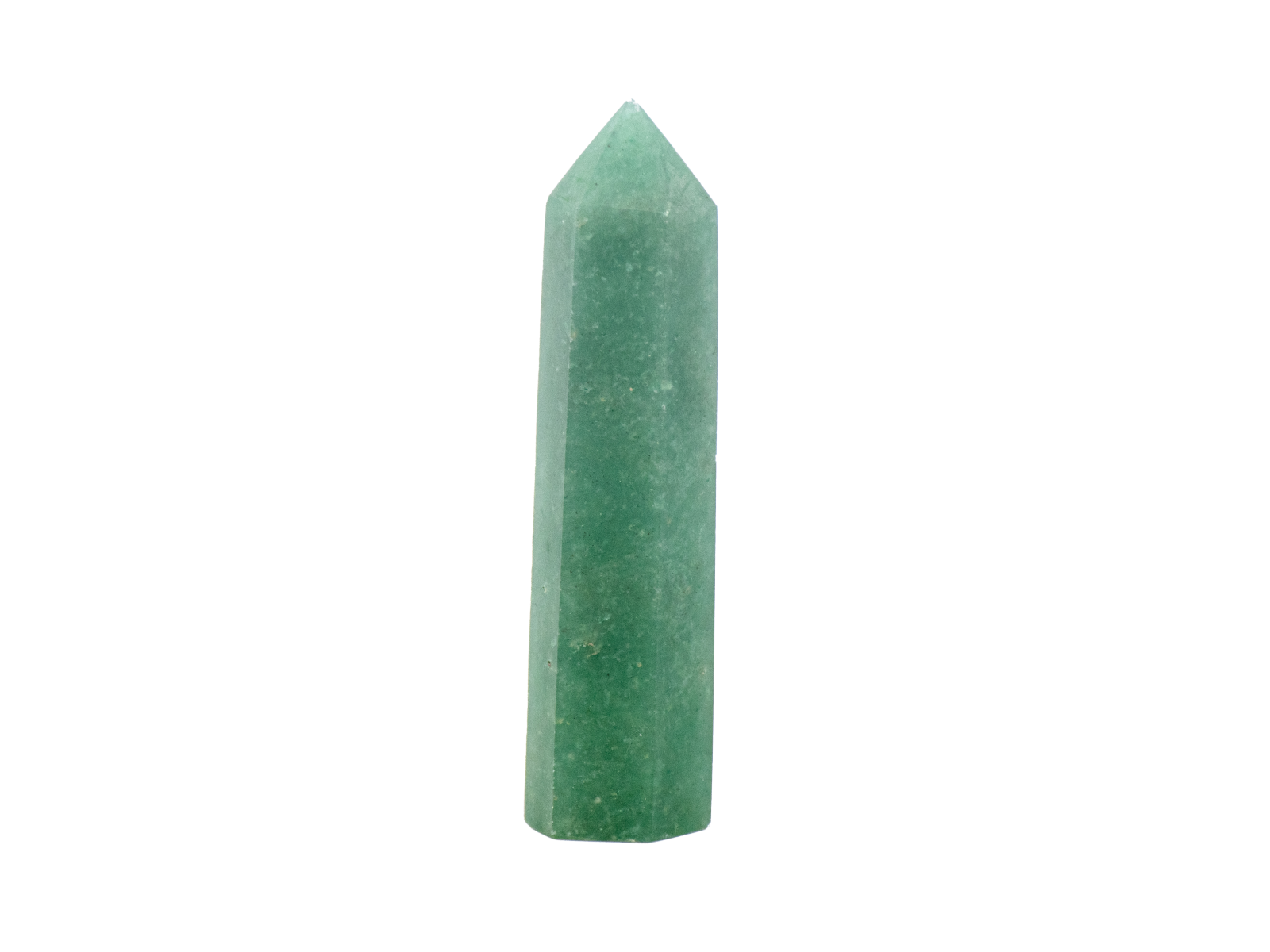
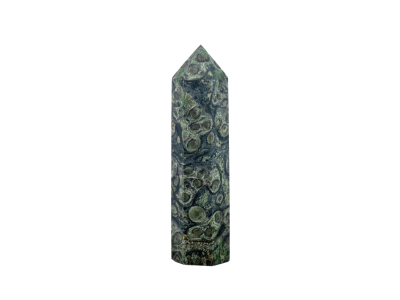
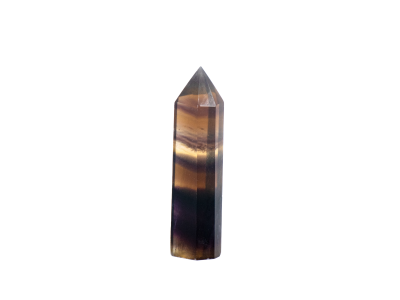
Height approx. 80–110 mm.
Smaller weight approx. 80–100 g, larger 110–130 g.
Sharpened to a point.
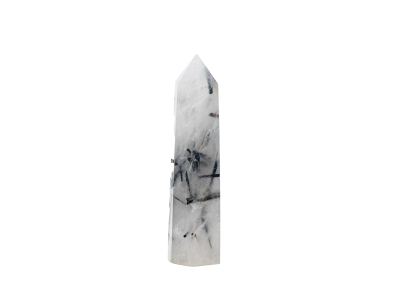
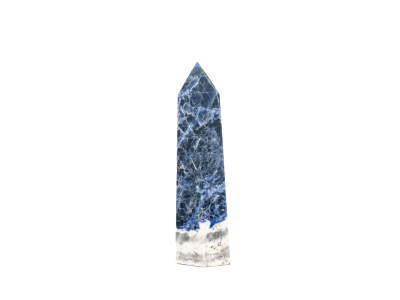
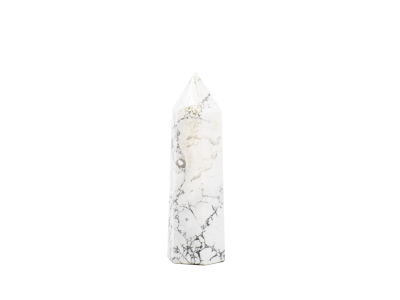
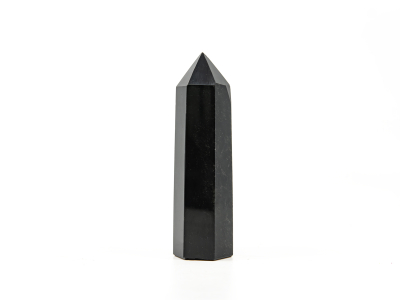
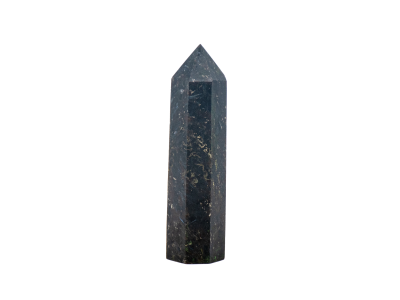
Photo is for illustration only. Each semi-precious stone is a unique original
and may differ slightly in shape and texture from the
photographs.






 Български
 Čeština
 Deutsch
 Eesti
Eesti
 Español
 Français
 Hrvatski
 Italiano
 Latviešu
 Lietuvių
 Magyar
 Nederlands
 Norsk
Norsk
 Polski
 Português
 Română
 Русский
 Slovenčina
 Slovenščina




 GB
GB