
 Български
 Čeština
 Deutsch
 Eesti
 Español
 Français
 Hrvatski
 Italiano
 Latviešu
 Lietuvių
 Magyar
 Nederlands
 Norsk
 Polski
 Português
 Română
 Русский
 Slovenčina
 Slovenščina

According to Traditional Chinese Medicine (TCM), November is a period of gradual transition to winter, slowing down, and conserving vital energy. The Water element comes to the forefront, associated with the kidneys and bladder. In TCM, the kidneys are considered the seat of the vital essence Jing, while the Water element is also linked to emotions of fear and anxiety.
With increasing cold and shorter days, nature naturally encourages us to adopt a calmer pace. How can we prepare for this period in accordance with TCM principles? We will explore this in the article, where you will also learn about the role of the Water element, how it relates to vital energy and emotions, and what dietary habits or daily rituals are suitable for this period. A simple warming recipe will also be included.
What is typical for November according to TCM?
After October, which in Traditional Chinese Medicine was marked by the Metal element, November brings us to the Water element. Nature prepares for winter regeneration. Trees lose their last leaves, days shorten, and the surrounding world slowly calms down.
In the system of five elements (Wu Xing), Water represents depth, calmness, renewal, and conservation of vital energy. It is associated with winter, cold weather, and a period when energy symbolically turns inwards. According to TCM, it is therefore advisable to limit unnecessary exhaustion, allow more space for regeneration, and protect the body from cold.
While daily duties continue regardless of the season, TCM reminds us of the importance of the natural alternation of activity and rest. Slowing down is not just preparation for winter, but also an opportunity to listen to one's own needs and allow time to recharge.
November in the rhythm of TCM in a nutshell
For a quick overview of the basic connections of November from the perspective of Traditional Chinese Medicine, we have prepared a clear summary of the key characteristics of this period:
- Season: transition from autumn to winter
- Month: November, a period of slowing down and conserving vital force
- Element: Water
- Energy direction: inwards and downwards, contraction and concentration of forces
- Typical climatic influence: cold
- Main area: management of vital energy, internal warmth and Jing essence
- Organ circuits: kidneys (Shen) and bladder (Pang Guang)
- Taste: salty
- Colours: black and dark blue
- Emotions: fear, anxiety, and inner tension
- In balance: feeling of security, courage, and inner peace
- In imbalance: according to TCM, anxiety, exhaustion, sensitivity to cold, or loss of inner support
- Natural need of the period: plenty of rest, warm food, protection from chilling, and careful management of energy
Why are the kidneys and bladder associated with the Water element according to TCM?
In Traditional Chinese Medicine, the kidneys and bladder have a broader meaning than just anatomical organs, as we know them from modern medicine. TCM understands them as interconnected functional circuits, to which it attributes a certain role in the management of bodily fluids and vital energy.
In the system of five elements, the kidneys (Shen) and bladder (Pang Guang) form a partner pair belonging to the Water element. The kidneys represent the Yin organ, associated with the storage of vital essence and the balance of Yin and Yang. The bladder is its Yang counterpart, which in this concept participates in the management of fluids and their excretion.
From a TCM perspective, the Water element symbolises not only the circulation of fluids but also depth, internal reserves, and the ability to store life force.
What does the life essence Jing represent?
One of the fundamental concepts of Traditional Chinese Medicine is the life essence Jing, which in this system is considered the basis of life constitution, growth, development, and ageing. According to TCM, it is stored in the kidney organ system and is divided into two components:
- Congenital Jing essence: Represents the life foundation inherited from parents at conception. In TCM, it is associated with individual constitution and natural life stages.
- Acquired Jing essence: According to traditional understanding, it arises from food and other sources of daily nourishment. It supplements the congenital foundation and is related to the ongoing management of life forces.
The idea of preserving life essence is one of the important themes of the winter period. TCM therefore emphasises a balanced daily routine, sufficient sleep, regular meals, and an appropriate alternation of activity and rest.
Fear, worries and inner peace: What emotions belong to the Water element?
In Traditional Chinese Medicine, individual elements are associated not only with natural cycles and organ systems but also with emotions. Fear is particularly characteristic of the Water element, along with feelings of uncertainty and worry.
Fear is a natural human emotion that warns us of possible danger. In TCM symbolism, however, it also represents the theme of inner certainty, courage, and the ability to face the unknown. These qualities are often associated with a balanced Water element.
It is not about suppressing fear or looking for the cause of health problems in it. It is important to allow yourself space to rest, recognise your own needs, and seek a balance between daily duties and personal well-being. Simple habits can help, such as regular sleep, moments without distracting stimuli, or time spent in a pleasant environment.
How to prepare for winter according to TCM principles?
Warming diet and suitable foods
In Traditional Chinese Medicine, not only the choice of ingredients but also their preparation plays an important role. As winter approaches, it is recommended to prefer warm, cooked, and stewed dishes, which correspond to the need to maintain internal warmth. Broths, thick soups, grain porridges, and seasonal vegetables are particularly important.
What to include in your November diet?
- Root and seasonal vegetables: Carrots, parsley, celery, pumpkin, or beetroot are excellent for baking, stewing, and preparing soups.
- Legumes: Black beans, lentils, or adzuki beans will diversify your diet and provide plant proteins and fibre. In addition, the colour black is symbolically associated with the Water element in TCM.
- Nuts and seeds: Walnuts and black sesame are among the foods that TCM associates with the winter period and the Water element. They are also a natural source of fats and other nutrients.
- Cereals: Rice, millet, or oats can serve as the basis for breakfast porridges and hearty side dishes.
- Aromatic spices: Ginger, cinnamon, or cloves will give dishes a warming aroma and a more distinct flavour. Use them sparingly so as not to overpower the natural character of the ingredients.
According to TCM, it is also advisable to pay attention to regular eating and calm dining. You do not have to fundamentally change your diet. Just include warm meals more often and choose ingredients that correspond to the season.
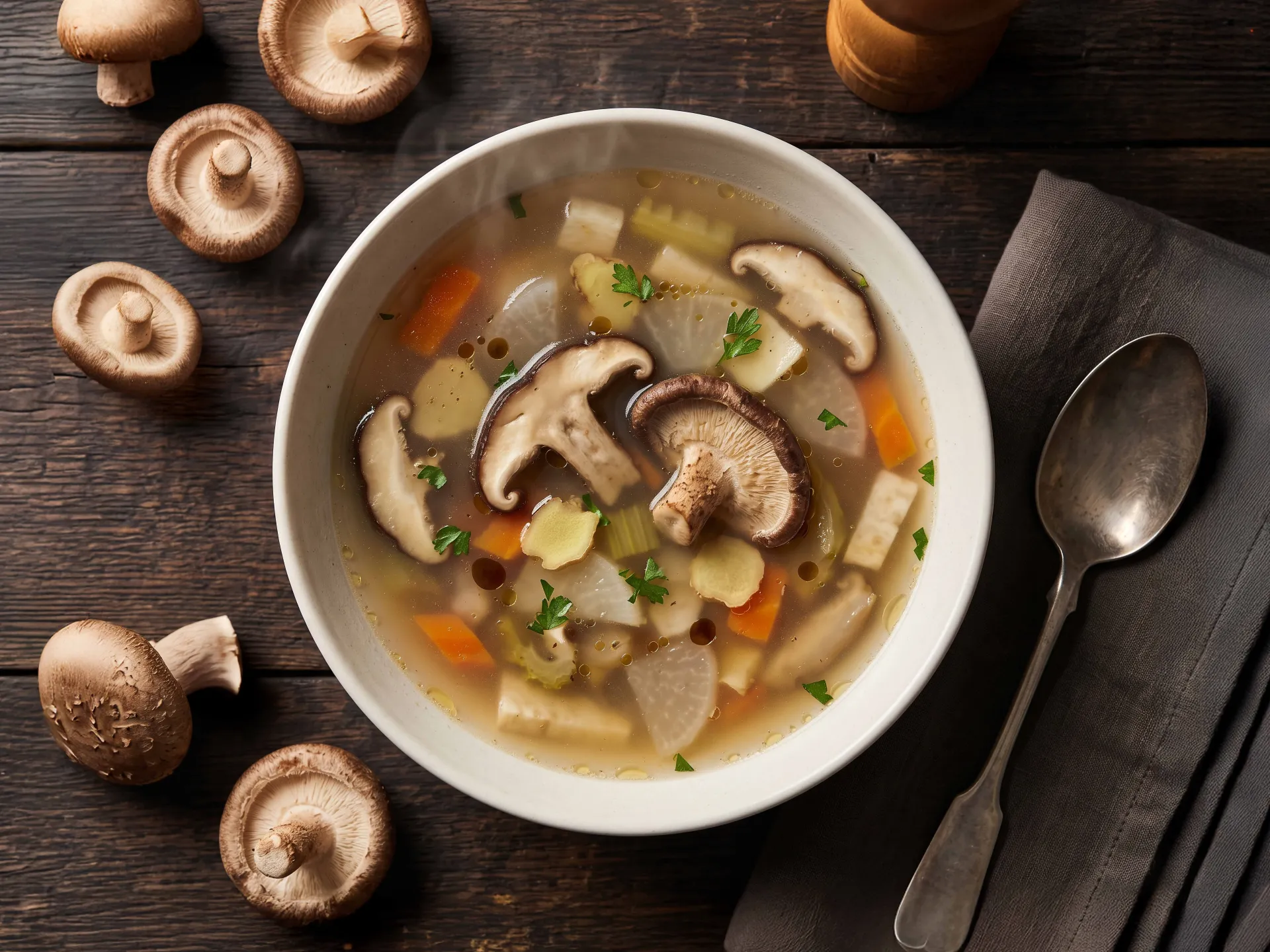
November Recipe: Warming Vegetable Broth with Shiitake Mushrooms
Slow-cooked broths have a firm place in Traditional Chinese Medicine. This recipe combines root vegetables, shiitake mushrooms, and gently warming spices. Slow cooking blends the individual flavours to create a fragrant broth that will warm you up nicely after returning from cold weather.
Ingredients:
- 2 carrots
- 1 parsley root
- ½ small celeriac
- 1 small white radish (daikon)
- 1 onion
- 2 cloves of garlic
- 2 to 3 dried shiitake mushrooms (or 100g fresh oyster mushrooms)
- 2 to 3 slices of fresh ginger
- 3 allspice berries
- 1 bay leaf
- 2 litres of water
- salt to taste
- 1 tablespoon of olive oil for roasting
- cold-pressed pumpkin oil
- fresh parsley for garnish
Method:
- Clean the carrots, parsley root, and celeriac and cut them into larger pieces. Arrange them on a baking tray with the halved onion, drizzle with a tablespoon of olive oil, and mix. Roast at 200 °C for approximately 15 to 20 minutes, until the vegetables are lightly golden.
- Transfer the roasted vegetables to a pot. Add the chopped white radish, garlic, dried shiitake mushrooms, ginger, and spices. Pour in two litres of water.
- Bring to a boil, then reduce the heat and let it simmer gently under a lid for approximately 1.5 to 2 hours.
- Strain the finished broth and season with salt. Return the chopped vegetables and mushrooms to the broth, if desired.
- Before serving, drizzle each portion with a few drops of pumpkin oil and garnish with fresh parsley.
BEWIT Tip: Shiitake mushrooms give the broth a distinctive umami flavour. If you don't have them on hand, you can substitute them with oyster mushrooms, for example. You can also prepare the broth in advance. It's excellent on its own in a mug for warming up, or as a nutritious base for other soups and sauces.
How to adjust your daily routine according to TCM before winter?
Self-care doesn't have to mean drastic changes. According to TCM, this period is primarily about small daily habits that help keep the body warm and create space for rest.
- Protect your lower back and feet from the cold: These areas are traditionally associated with the kidney meridian in TCM. Therefore, remember to wear warm socks, layer your clothing appropriately, and protect your lower back from getting cold.
- Prioritise warm drinks: Enjoy lukewarm water, herbal tea, or a gentle infusion with a slice of ginger throughout the day. They will warm you up nicely and diversify your daily fluid intake.
- Treat your feet to an evening bath: Soak your feet in pleasantly warm water for 10 to 15 minutes. Then gently massage them and put on socks. This simple care can become a favourite evening ritual.
- Ensure regular sleep: With shorter days, give your body enough time to rest. Go to bed at the same time if possible and create comfortable conditions for an undisturbed night.
- Find a moment without screens: Put away your phone before bed, dim the lights, and do something you enjoy. Perhaps reading, listening to music, or just a few minutes in silence.
Natural products inspired by TCM
Traditional Chinese Medicine works with a variety of herbal formulations, vital fungi, and aromatic plants. We have selected several BEWIT products whose composition or symbolism relates to the themes of this period.
WAN herbal blends according to TCM
Wans are a form of herbal blend used in Chinese medicine. Their formulations combine plant ingredients according to established procedures and are based on the concept of individual organ systems.
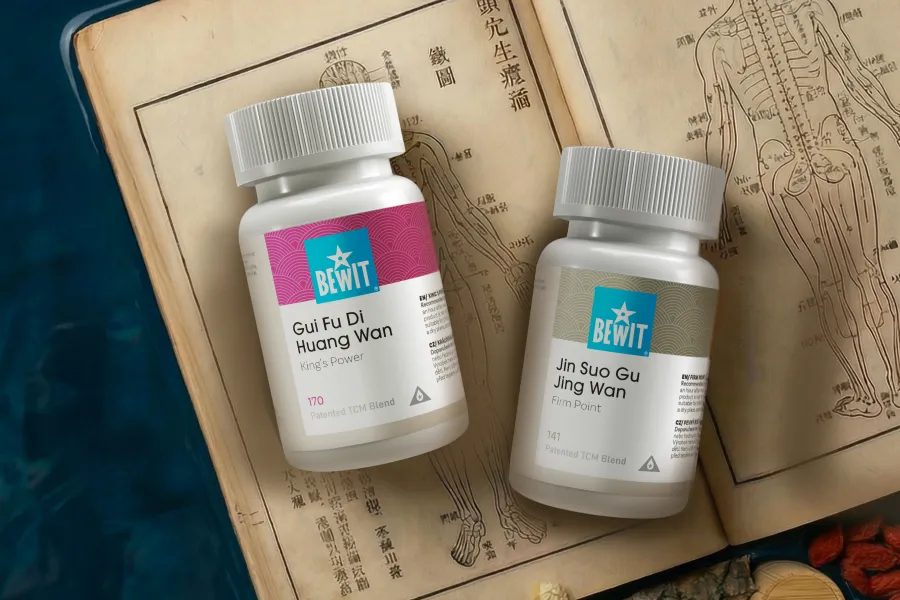
- 170 Royal Power (Gui Fu Di Huang Wan) – a formula containing, among other ingredients, Rehmannia, Chinese Yam, and Cinnamon. In TCM, it is associated with the principle of internal warmth and the Yang aspect of the kidneys.
- 141 Fixed Point (Jin Suo Gu Jing Wan) – a traditional blend with Indian Lotus and other plant ingredients, whose symbolism stems from preserving the vital essence of Jing.
Vital Mushrooms and Natural Nutrition
Mushrooms and other plant raw materials also hold a significant place in Eastern traditions. Besides their historical use, their composition and processing method are particularly noteworthy.
- Cordyceps Premium Organic – a vital mushroom associated with Yang energy and the kidney organ system. The premium extract contains at least 30% beta-glucans.
- Reishi Premium Organic – known in Chinese culture as Ling Zhi, a symbol of longevity. Thanks to dual extraction, it contains various groups of natural substances, including at least 30% beta-glucans.
- PRAWTEIN Ginseng Plus – a blend of Organic RAW cocoa, ginseng, maca, and other plant ingredients. Ginseng has a long tradition in TCM and is often referred to as a Qi tonic.
- Organic Black Cumin Oil – cold-pressed virgin oil with a characteristic spicy taste and a history of use dating back to ancient Egypt.
Essential Oils for Moments of Relaxation
Scents can transform the atmosphere of a home and make daily rituals more pleasant. For this period, herbal, woody, and spicy compositions are particularly suitable, as their character harmonises with the autumnal calm.
- HELP K – a herbal blend with woody and citrus notes, whose scent evokes firmness, certainty, and grounding.
- WATER – a composition inspired by the element of Water. It combines woody, spicy, and slightly sweet notes with the traditional symbolism of depth and tranquillity.
- Juniper, Berry – a distinctive forest aroma, which in TCM is thematically associated with the kidney and bladder meridians.
The selection is also complemented by other scents. CALMING will make evening relaxation more pleasant, Ginger will captivate with its warm spicy notes, Himalayan Cedar with its deep woody aroma, and Cypress with its symbolism of flow and change.

What to remember from the article?
- November in TCM is associated with the Water element, which symbolises calm, depth, and the storage of vital energy before winter.
- The Kidneys and Bladder form the paired organ circuits of the Water element. In this concept, the Kidneys are considered the seat of the vital essence Jing, which is related to constitution, growth, and development.
- Fear and anxiety are emotions associated with the Water element. Its balance, on the other hand, symbolises courage, inner certainty, and the ability to face change.
- Diet plays an important role in preparing for winter. TCM recommends prioritising cooked and stewed dishes, vegetable broths, seasonal ingredients, and warming spices, such as ginger or cinnamon.
- Small daily habits have their significance. Protect your lower back and feet from the cold, ensure regular sleep, and allow yourself enough time to rest.
Glossary of Terms
TCM (Traditional Chinese Medicine) – a traditional system that works with the concepts of yin and yang, Qi, the five elements, and functional organ circuits. It perceives a person in relation to their lifestyle, emotions, and environment.
Water Element – one of the five elements of TCM. It is associated with winter, cold, the kidneys and bladder, salty taste, black colour, and the storage of vital energy.
Wu Xing (Five Elements) – a traditional system of five interconnected elements: Wood, Fire, Earth, Metal, and Water. It is used to describe natural cycles and relationships in the context of TCM.
Yin and Yang – two complementary aspects that symbolise natural balance in TCM. Yin is associated with calm, cold, and rest, for example, while yang is associated with warmth, movement, and activity.
Qi (Chi) – one of the fundamental concepts of Traditional Chinese Medicine, usually translated as vital energy.
Kidneys (Shen) – a functional organ circuit in TCM associated with the Water element, the storage of vital essence Jing, and the balance of yin and yang. It is not an exact equivalent of anatomical kidneys.
Bladder (Pang Guang) – the paired organ circuit of the kidneys, to which TCM attributes a role in the management and excretion of bodily fluids.
Jing (Ching) – vital essence, which in TCM is considered the basis of constitution, growth, development, and ageing. It is distinguished as congenital and acquired.
Wany – traditional Chinese herbal blends in the form of pellets. BEWIT products in this category are food supplements inspired by TCM recipes.
Visit the Year in the Rhythm of TCM category and explore the range of products inspired by Traditional Chinese Medicine.