Do you want to cleanse your energy while encouraging your mind and heart to
be joyful and creative?
Experience the aromatic smoke of Hymenaea verrucosa resin. Its
distinctive, rich scent lightly embraces you and makes you feel calm and
relaxed. Take a moment for yourself and notice how it clears the space,
disperses the stagnant atmosphere and promotes inner balance.
It will come in handy when you need to quickly remove negative
energies from rooms and personal aura. It will banish old, stagnant
emotional states and restore a sense of well-being and spirituality. It will
dispel fear, brighten the mind and bring new inspiration.
It will help settle your thoughts and calm your breath, making it an ideal
companion for rituals, meditation or creative work. Perfect for
spaces where you desire a gentle fragrance without heavy smoke.
In traditional cultures, copal is used in ceremonies, offered to the gods,
celebrated at family gatherings, and incorporated into traditional healing
practices. Helps to prepare the space for prayer and
inner work.
It can become a 100% natural tool for you to cleanse your home,
harmonise your emotions and deepen your spiritual practice. Revitalises
your inner strength, uplifts your joy, and reconnects you with nature and the
ancient tradition of incense burning.
Why burn incense
Burning incense is an ancient way to purify space, uplift the mind
and induce harmony. The smoke of the resins purifies the air, bringing
peace, concentration and spiritual attunement.
Calms, helps harmonise emotions Promotes focus and clarity of mind
Accompanies rituals and spiritual practice Brings energetic harmony to your
space. Neutralises odours
Instructions for use – how to burn incense
On carbon: Put the quick-lighting carbon in a fireproof
container with sand, light it and add a piece of resin. This method is most
effective for a quick energetic cleanse, though it produces more smoke and
requires ventilation.
On a censer with a mesh screen: The use of special sticks
ensures a gentler and longer heating, ideal for meditation or smaller spaces.
After burning, remove the resin residue from the sieve with a brush or in
warm water.
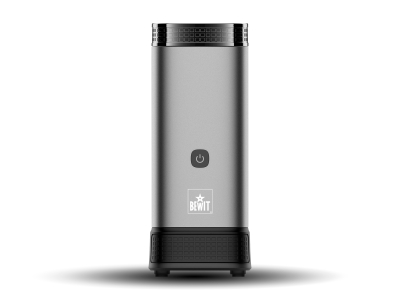
In an electric incense burner: A convenient, modern, and
safe way to burn incense, designed to prevent thick, overpowering smoke. The
incense burner is portable and ensures that the incense blends do not
burn out.
Burning incense tips
For a purer fragrance, we recommend using a mica plate (a
thin sheet of mica), which prevents burnt notes and ensures a gentler,
longer-lasting scent.
Larger beans can be lightly crushed in a mortar to release the aroma more
quickly.
Safety notice
Always use a non-flammable container and keep it out of the reach of children
and animals. Do not leave the fire unattended. Take care of ventilation. Do not
breathe smoke at close range. Those sensitive to smoke or who are pregnant
should burn incense in moderation.
Resin or essential oil?
Resins and essential oils have some common effects, but they differ in
many ways.
Incense blends natural resins, herbs, woods, and spices,
releasing their aroma through charcoal, a censer, or an incense burner, while
essential oils capture the pure essence of plants, filling the
air or nurturing the skin when carefully applied.
Unlike essential oils, incense offers an authentic, ‘living’
fragrance with smoky and woody notes, delivering a swift and powerful
energetic cleansing of your space while enhancing
rituals, meditation, women's circles, and ceremonies.
Choose essential oils when you desire a subtle, long-lasting
fragrance for your home or workspace, along with the benefits of aromatherapy
Incense is perfect for powerful cleansing, sacred moments,
meditation, rituals, and ceremonial practices.
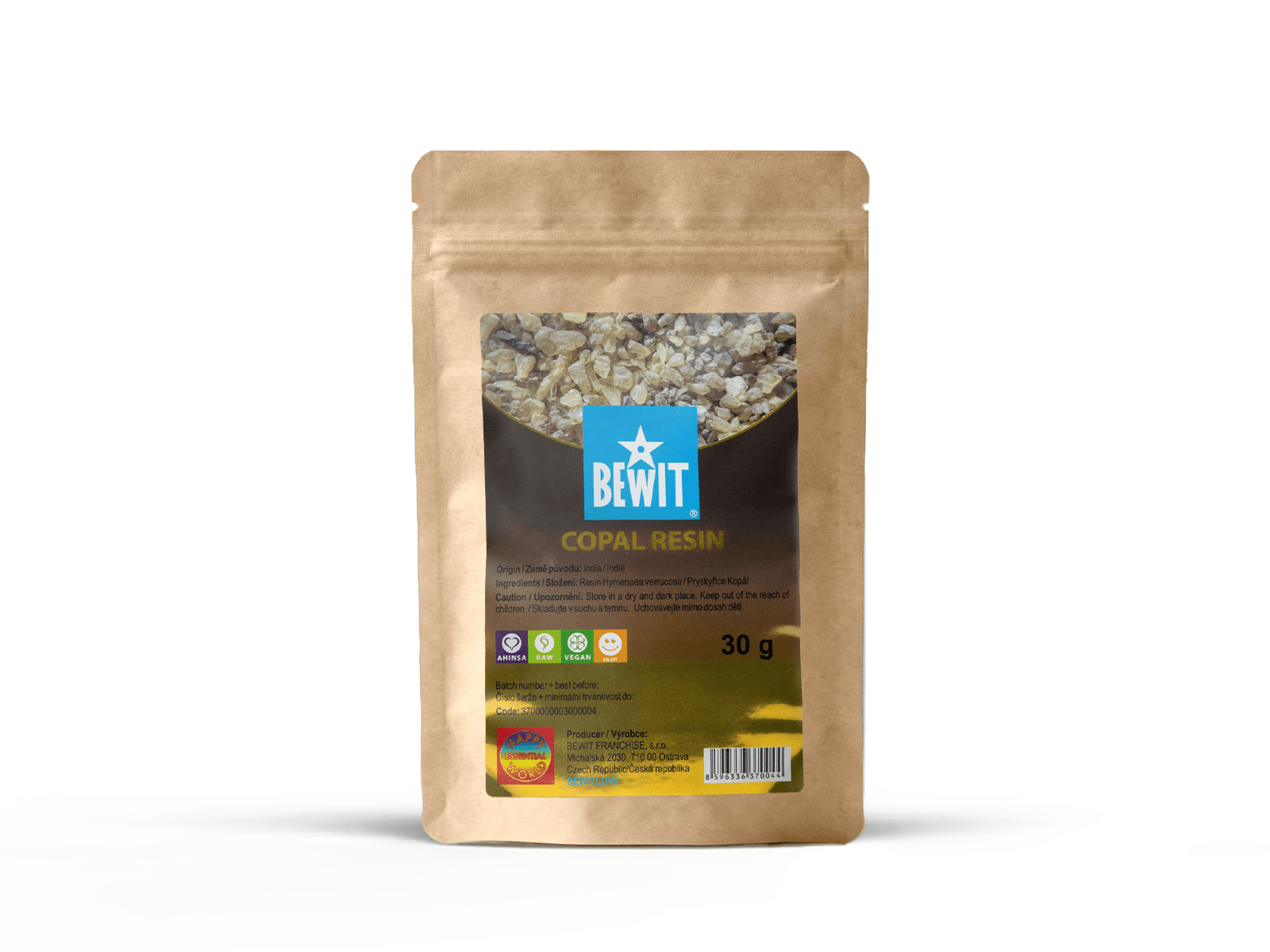
Zanzibar Copal
The resin known as Zanzibar copal is obtained from the tree Hymenaea
verrucosa. It originates from the coast of East Africa (Tanzania, Kenya,
Mozambique, Somalia) and adjacent areas of the Indian Ocean (Zanzibar,
Madagascar, Seychelles, Mauritius).
Archaeological findings at Unguja Ukuu in Zanzibar show that the
Copal has been in use here since the 7th-8th centuries. It has
been used for ceremonial and ritual purposes and as a raw ingredient in
traditional medicine.
In the 18th-19th centuries, East African copal was a key raw ingredient for
the production of high quality lacquers for furniture, carriages and later even
wagons.
Its smoke is balmy, rich and clean.
Try also
Recommended storage
Store in a dry, dark and cool place, well sealed (the resin absorbs
moisture).
Ingredients
Copal resin Hymenaea verrucosa
Country of origin
India
India






 Български
 Čeština
 Deutsch
 Eesti
Eesti
 Español
 Français
 Hrvatski
 Italiano
 Latviešu
 Lietuvių
 Magyar
 Nederlands
 Norsk
Norsk
 Polski
 Português
 Română
 Русский
 Slovenčina
 Slovenščina






 SK (
SK (
 HU (
HU (