History
Mustard is one of the oldest spices ever recorded in writing. In fact, this
highly aromatic spice is mentioned in Sanskrit records dating back to 3000 BC.
The first promoters of mustard seed products were the ancient Romans, who
crushed the seeds together with sour fruit juices to form a thick juice. They
gave this juice the name mustum ardens, which translates as ‚juice with a
burning taste‘. This is where mustard got its English name or its French name
moutarde. It is thanks to the Romans that we eat mustard as we know it today.
Over time, the recipes were brought to Gaul. From there, it spread throughout
Europe and other parts of the world. In addition to their seasoning properties,
mustard seeds had other uses. The ancient Romans used them to relieve toothaches
and Pythagoras himself used a poultice of mustard seeds to soothe wounds after a
scorpion bite.
Origin and cultivation
This annual plant is native to India, where it is still widely cultivated
today. It is an oilseed plant that grows to a height of almost one metre. It
produces smaller yellow flowers which are arranged in raceme-like
inflorescences. The fruits of mustard are shorter bracts covered with small
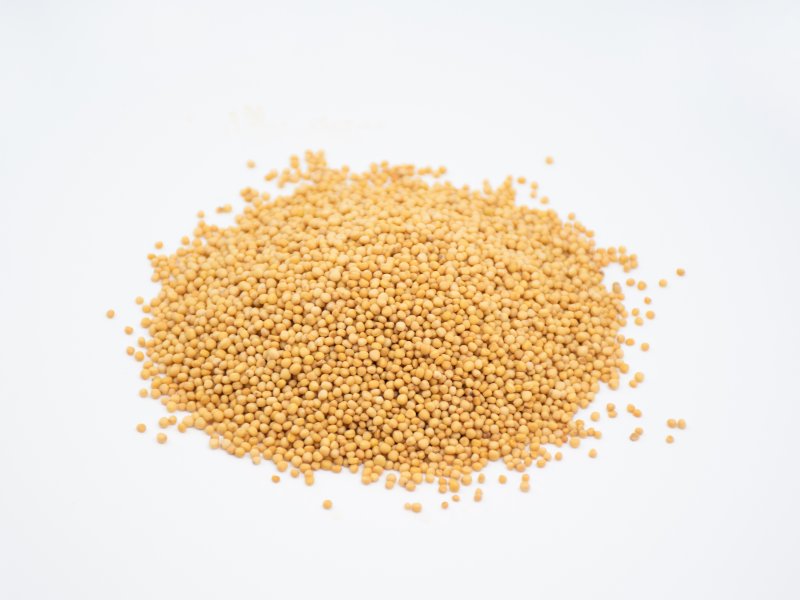
hairs. Inside the seeds are yellow mustard seeds, which are harvested when
fully ripe.
Composition and properties
Mustard seeds are a rich source of a wide range of enzymes, vitamins and
minerals. Of the biologically active substances contained in mustard, a
glycoside called sinalbin is considered to be the main active substance.
Crushing the seeds causes various reactions of the released sinalbine. The
crushed seeds are therefore used to prepare various poultices or homemade
ointments for joints.
Instructions for use
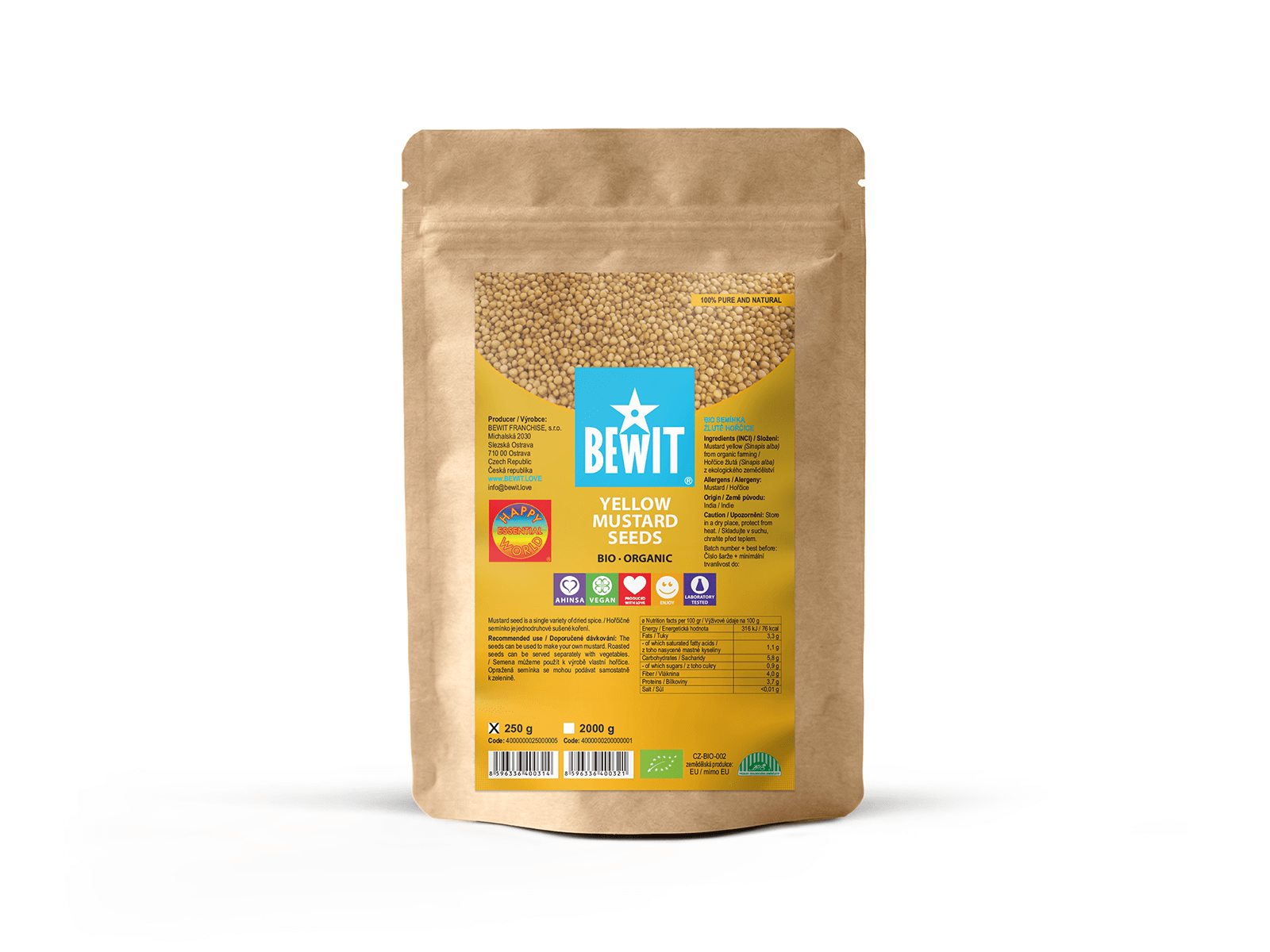
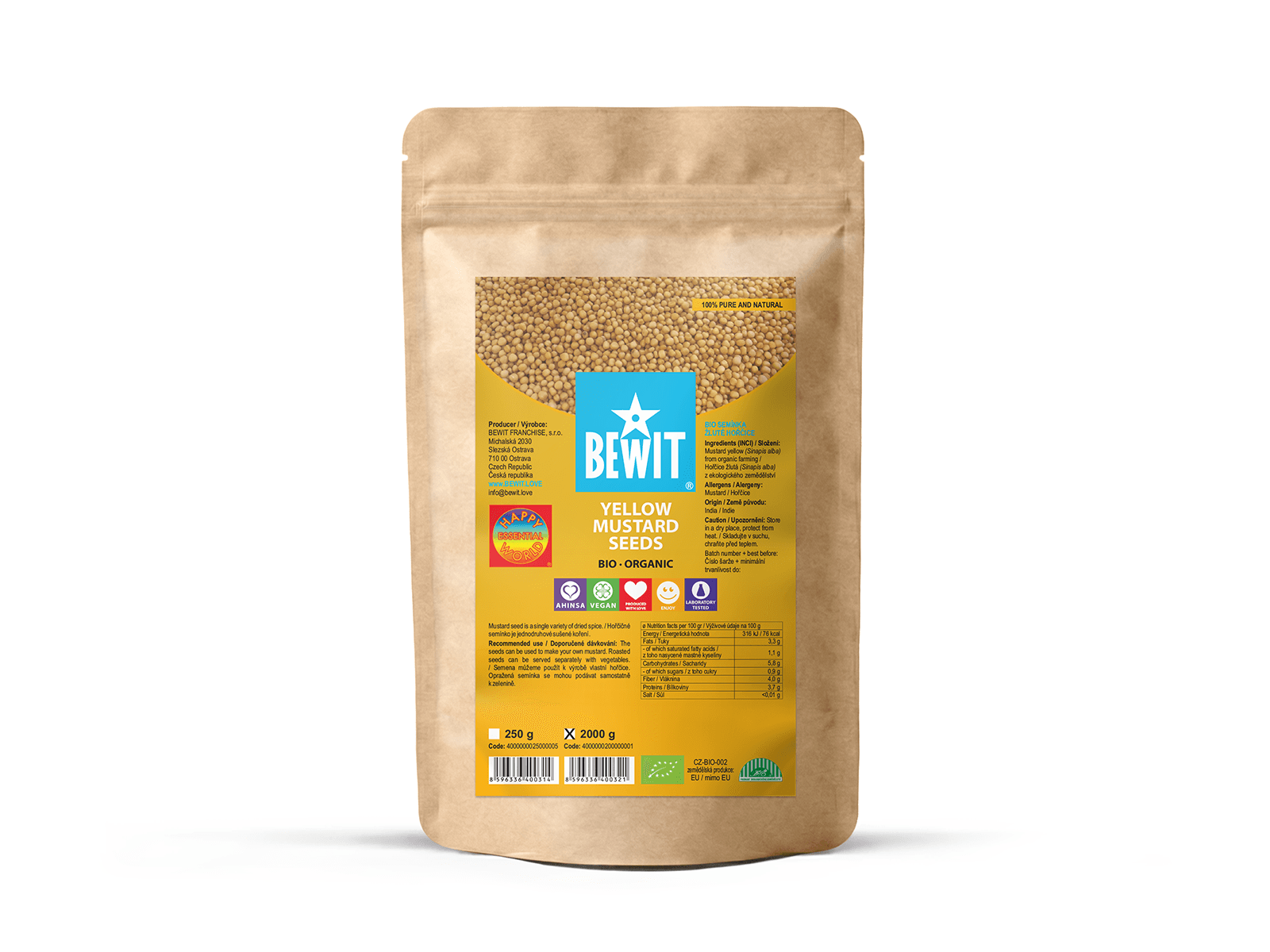
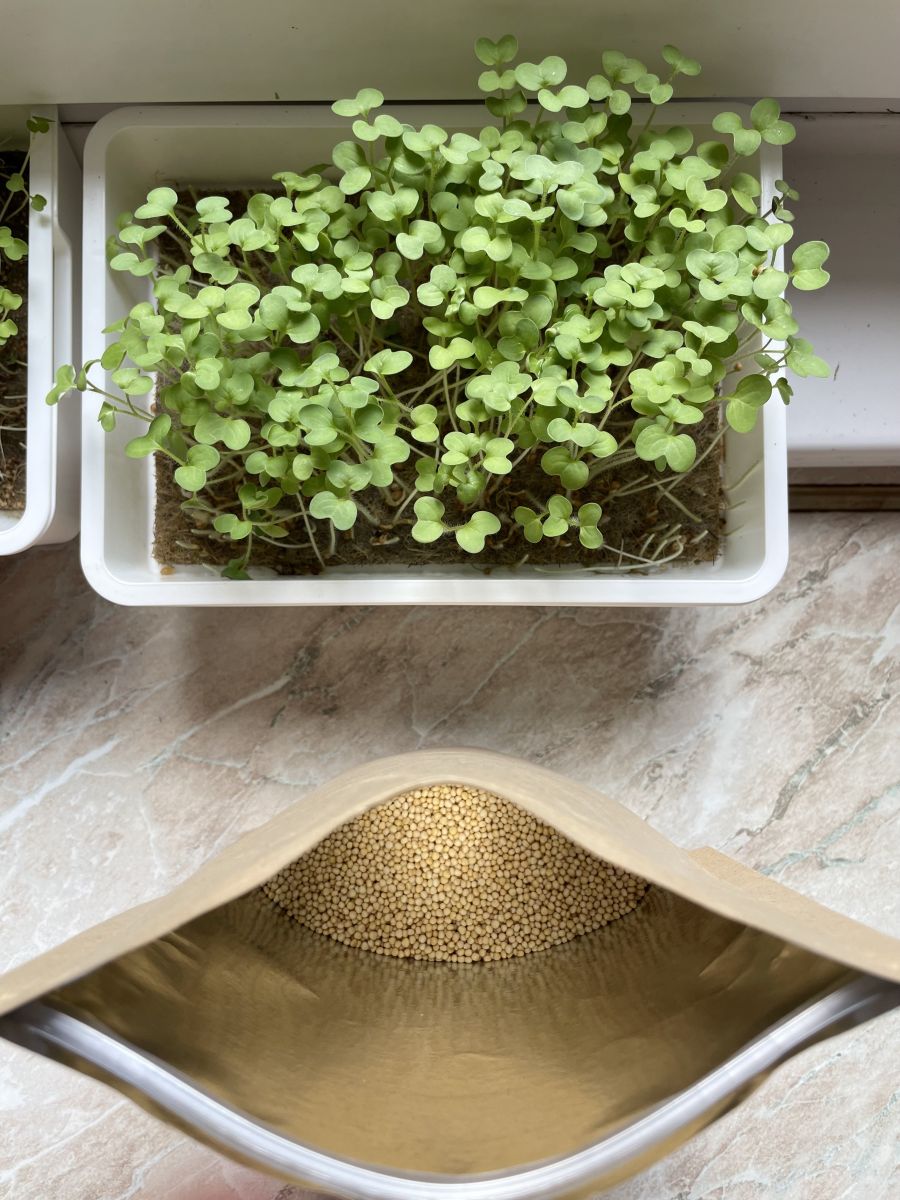
Yellow mustard seeds have a wide range of uses. The seeds can be used whole
or ground when preparing dishes. Whole mustard seeds are an ideal raw material
for the preparation of the husks used in pickling vegetables. They are also
suitable for the preparation of sauces and pickling meat. Roasted seeds have a
spicy, slightly nutty flavour and can be used to enrich various vegetable or
legume dishes. Ground seed powder is an essential ingredient in homemade
mustards.
Origin: India
Sources:
[1] EKANAYAKE, Athula, Gerhard N. ZEHENTBAUER and Jairus R.D.DAVID,
2016. Yellow or White Mustard (Sinapis alba L.) Oils. Essential Oils in Food
Preservation, Flavor and Safety. 857–863.
[2] YAN-FANGA, Xian et al. 2018. Comparison of the anti-inflammatory effects
of Sinapis alba and Brassica juncea in mouse models of
inflammation. Phytomedicine. 50, 196–204.
[3] FRANK, NANCY et al., 2010. Semiquantitative Analysis of 3-Butenyl
Isothiocyanate To Monitor an Off-flavor in Mustard Seeds and Glycosinolates
Screening for Origin Identification. Journal of Agricultural and Food
Chemistry. 58, 3700–3707.
[4] BOSCARO, Valentina et al. 2018. Antiproliferative, Proapoptotic,
Antioxidant and Antimicrobial Effects of Sinapis nigra L. and Sinapis alba L.
Extracts. Molecules. 23(11), 3004.
[5] AKBAR, Shahid, 2020. Handbook of 200 Medicinal Plants [online].
Springer [cited 2020–05–26]. ISBN 978–3–030–16807–0. Dostupné
z: https://doi-org.proxy.k.utb.cz/…-030-16807-0





 Български
 Čeština
 Deutsch
 Eesti
Eesti
 Español
 Français
 Hrvatski
 Italiano
 Latviešu
 Lietuvių
 Magyar
 Nederlands
 Norsk
Norsk
 Polski
 Português
 Română
 Русский
 Slovenčina
 Slovenščina







 HU (
HU (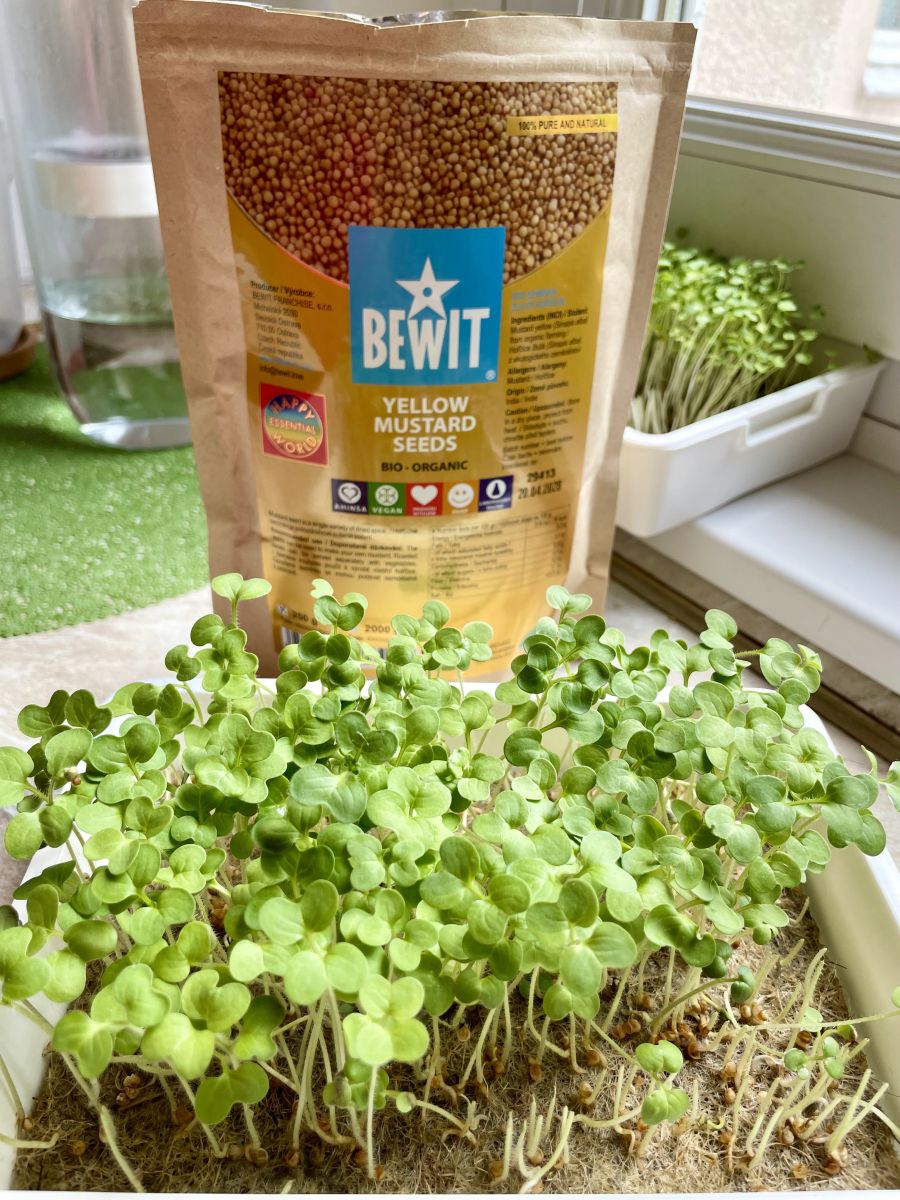

 CS (
CS (
