Do you suffer from dry skin, want to stop wrinkles or moisturize your hair
and love homemade beauty creations?
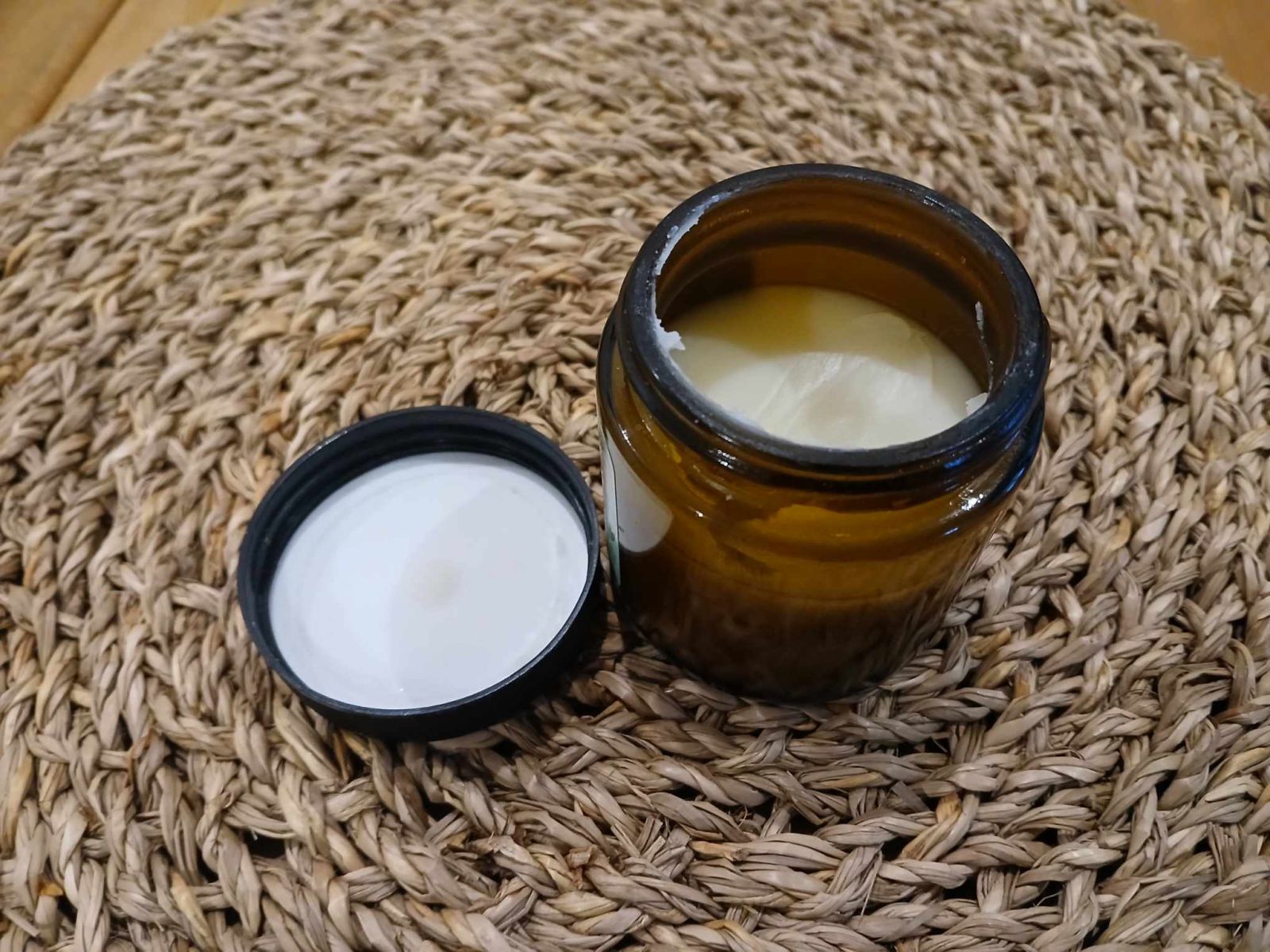
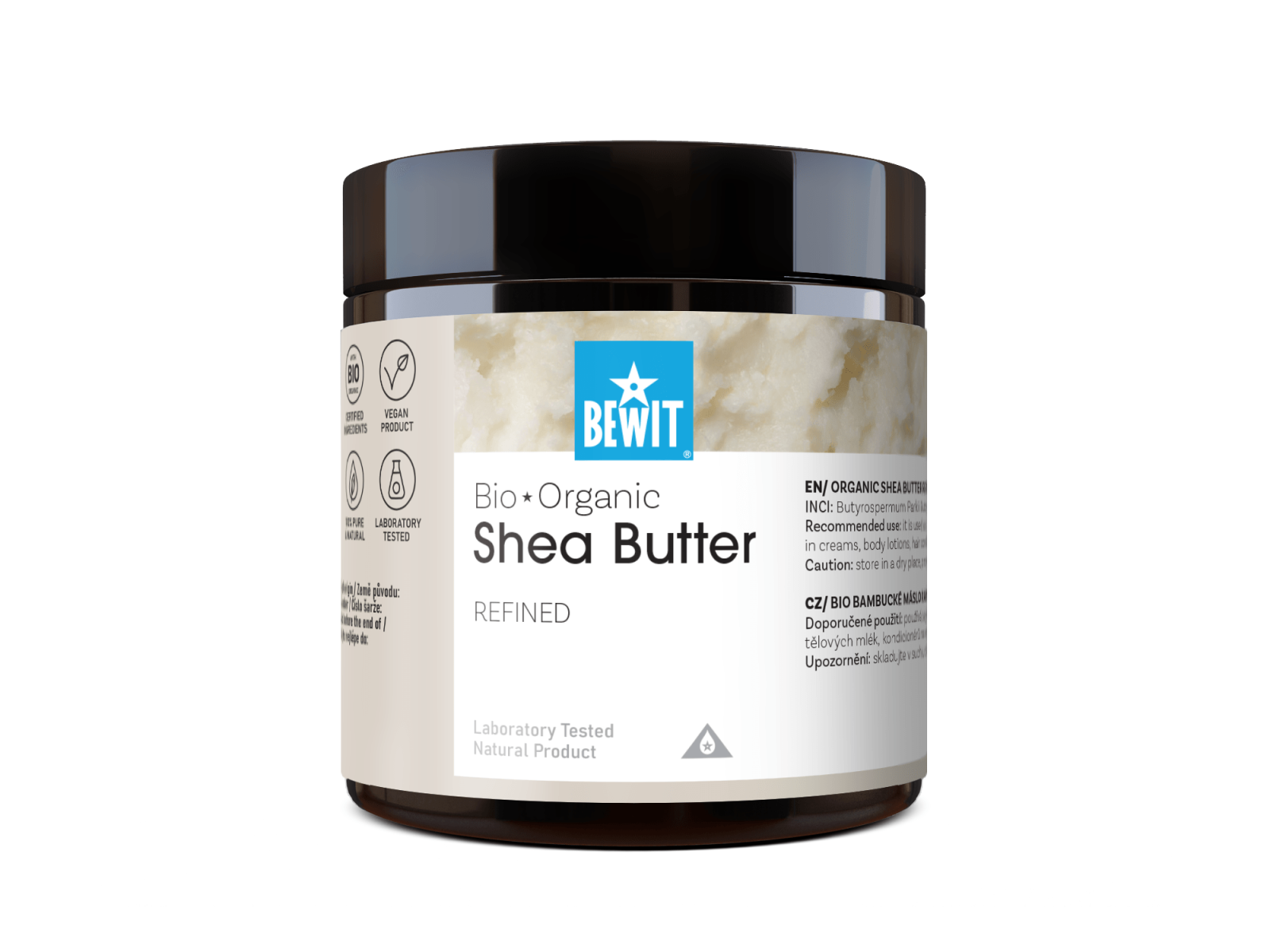
Then you should not miss the organic refined shea butter. It is a
versatile, widely used natural raw material
for making creams, body butters, lip balms, hair masks, conditioners and other
products. But it is also suitable as part of decorative cosmetics, for example
lipsticks or eye shadows.
It has nice texture and already melts at body temperature,
so it’s nice and easy to work with. The neutral scent makes
it applicable to any type of product, it does not irritate or disturb your
chosen fragrance, such as fragrance from essential oils.
It intensively moisturizes so it is especially loved by
dry and mature skin, which remains soft and
smooth after application. It's full of vitamins and also works as an
antioxidant, so you’ll often find it in anti-aging cosmetics.
It promotes the production of collagen, thus contributing to the natural
elasticity and firmness of the skin.
It does not clog pores and is suitable for problematic skin
prone to breakouts, as well as for sensitive skin that reacts
easily with irritation. Feel free to use it on even the most delicate cuticles
of small children and babies.
It also serves to moisturize and nourish the scalp and
hair or to grow strong and shiny nails.
Benefits of shea butter
- 100% natural and vegan, with no synthetic
ingredients
- Rich in vitamins A and E
- Antioxidant, protects skin from free radicals
- Promotes collagen production
- Intensely moisturizes dry and damaged skin
- Improves elasticity and softness of
the skin
- Helps smooth fine wrinkles
- Promotes regeneration and soothes
irritation
- An ideal ingredient for making homemade natural
cosmetics
How shea butter is made
Shea butter, also known as karité, is made by
pressing the seeds of Butyrospermum Parkii (the African butter
tree). The relatively complex and physically demanding process
involves collecting the seeds, cleaning and cold-pressing them to preserve all
the natural nutrients and essential fatty acids. Subsequently, the butter can be
refined to become softer and more suitable for cosmetic
purposes.
The African butter tree grows in the sub-Saharan belt, in
countries such as Mali, Ghana and Burkina Faso. In its homeland, shea butter
has been valued for centuries in traditional medicine and as a
basic ingredient in cosmetic preparations, but also in local cuisine.
According to tradition, the fruits of the shea tree are mainly collected and
processed by women. With the support of various international
programmes, they are getting a chance for economic independence, shea butter is
therefore of great economic and social importance in these countries. An
important aspect of shea butter production is also the focus on
sustainability and traditional processing
methods.
Refined or unrefined
Our shea butter is refined. This means that it has undergone
a process that has removed the natural impurities, smell and
colour. This gives it a longer shelf life, a
finer consistency and texture, a neutral scent and
a lighter colour, making it more suitable for cosmetic
products.
The main differences between refined and unrefined shea butter: Refined
butter has a neutral scent, while unrefined butter smells typically nutty.
Refined butter is usually lighter to white in colour, while unrefined butter
ranges in colour from cream to yellow. During refining, some of the beneficial
components may be removed.
Recommended use
Use as a raw material for the production of cosmetics, creams, body lotions,
balms and decorative cosmetics.
Recommended storage
Store dry, protect from heat.
Country of origin
Morocco
Ingredients
Butyrospermum Parkii Butter
&t=1s






 Български
 Čeština
 Deutsch
 Eesti
Eesti
 Español
 Français
 Hrvatski
 Italiano
 Latviešu
 Lietuvių
 Magyar
 Nederlands
 Norsk
Norsk
 Polski
 Português
 Română
 Русский
 Slovenčina
 Slovenščina








 PL (
PL (
 CS (
CS ( SK (
SK (