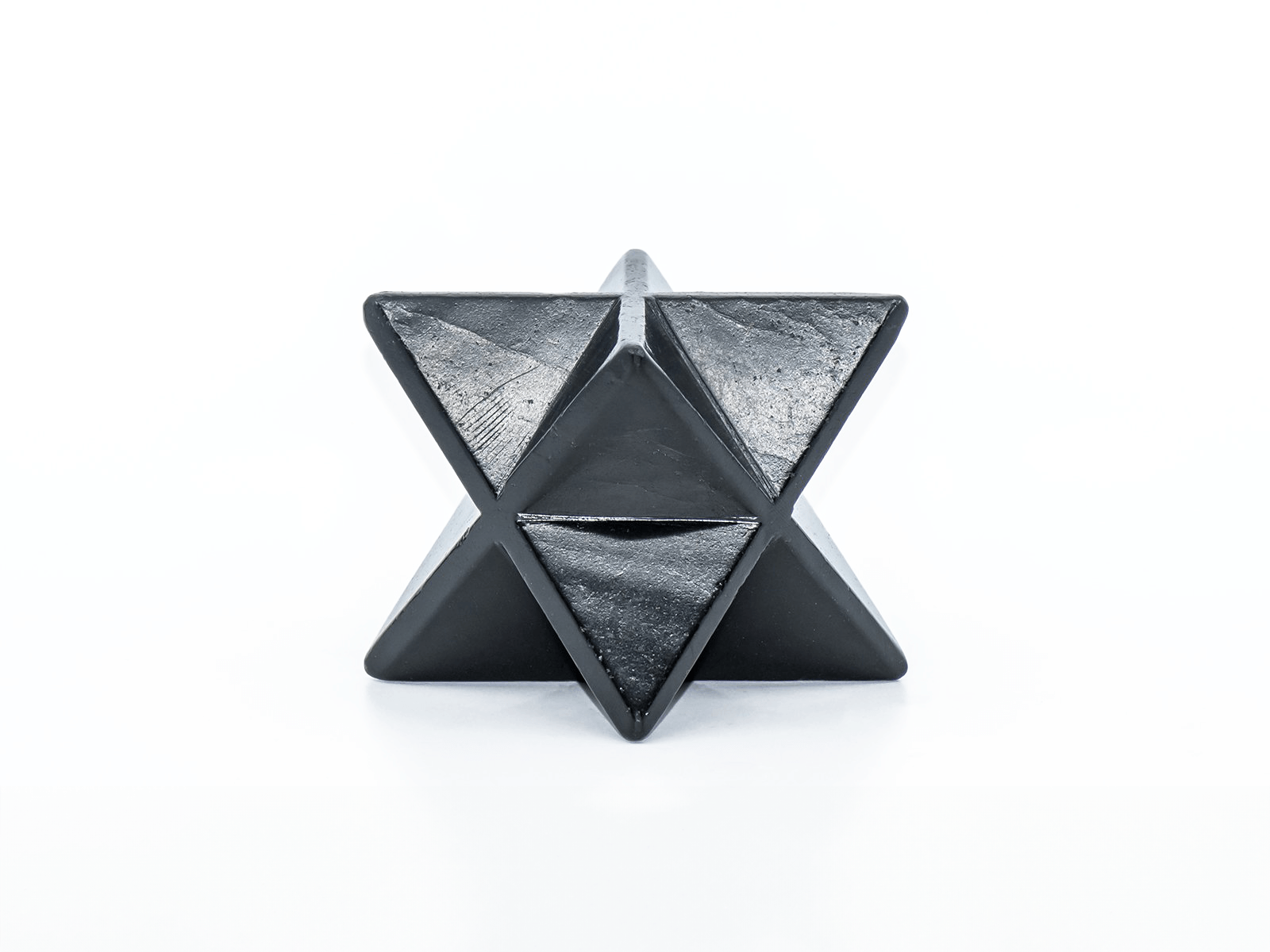
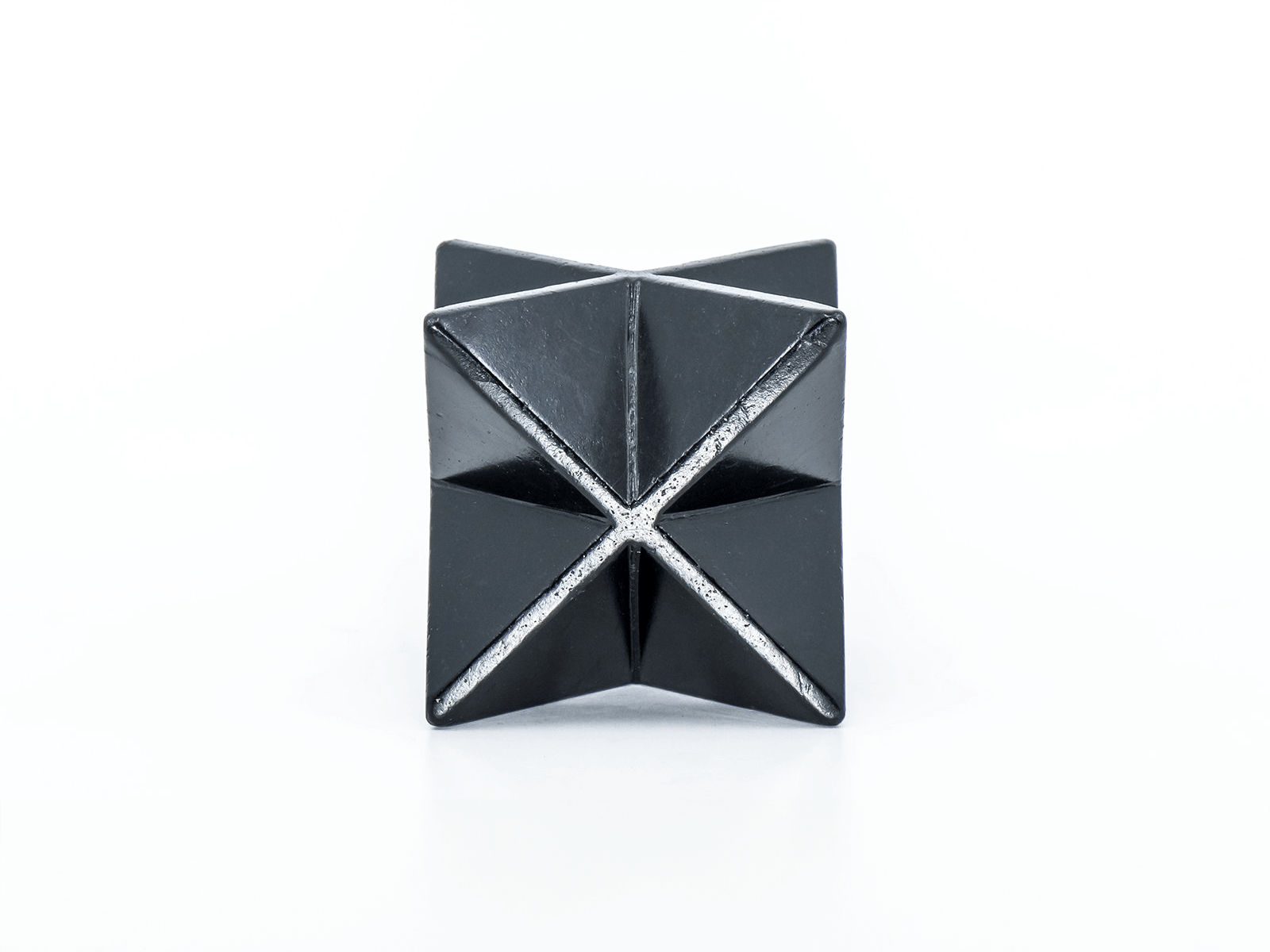
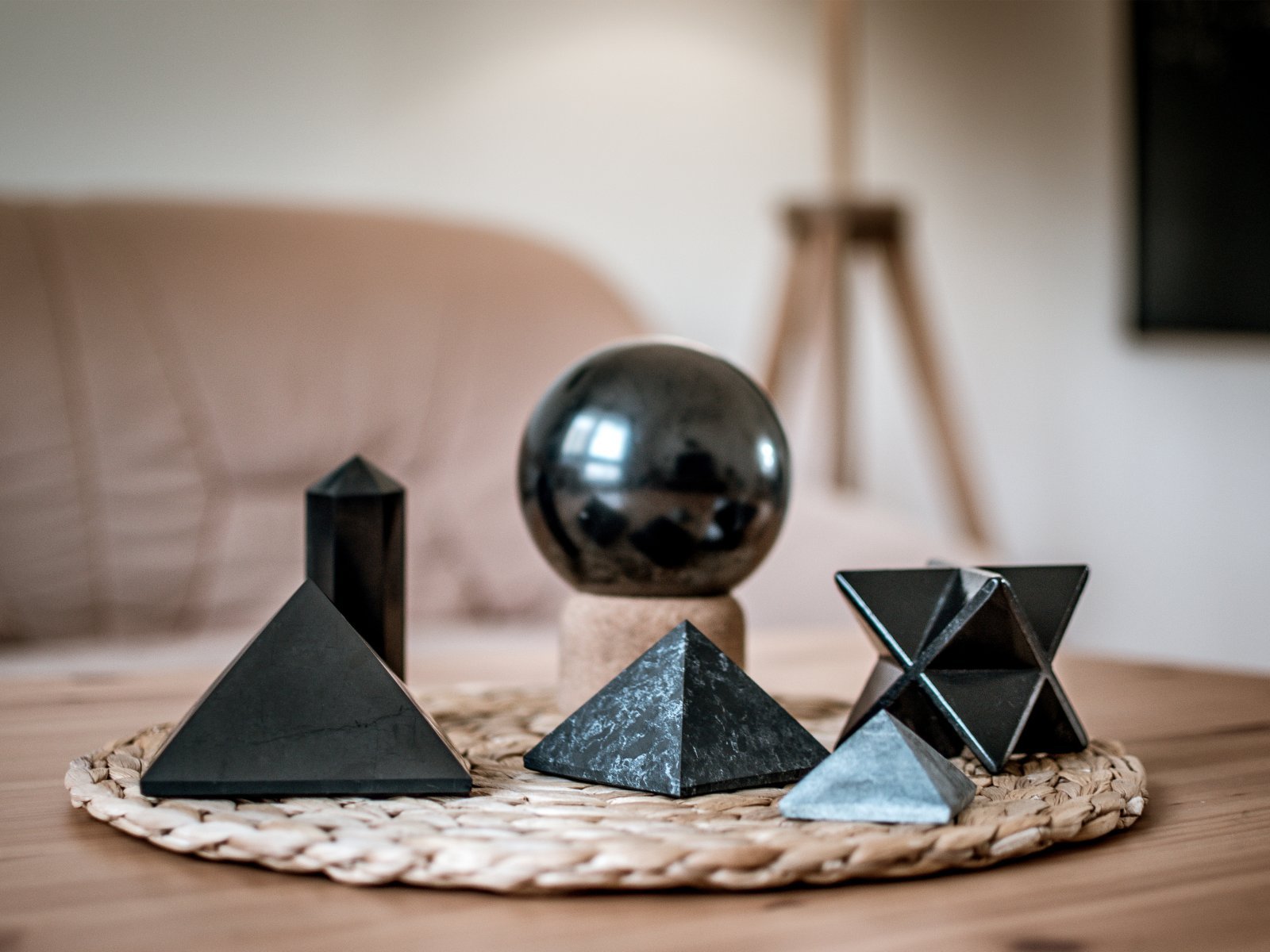
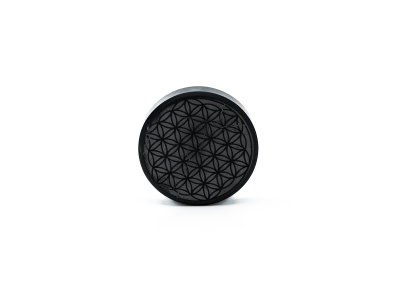
Merkaba from shungite
The magical and meditation tool of shungite, Merkaba, is a
crystalline structure and belongs to the objects of so-called sacred
geometry.
It helps to activate and strengthen personal protective
field, to reach a higher state of consciousness, to establish a relationship
with your Merkaba.
It is used for meditation, deepening concentration, achieving an altered
state of consciousness in order to calm the mind and gain insight into the
nature of things or issues, energy work, etc.
Benefits of shungite merkaba
- Binds heavy metals, ammonia, petroleum products, pesticides, phenols,
surfactants, chlorine and other organic and inorganic substances
- Filters out electromagnetic and radio frequency radiation.
- It's conductive.
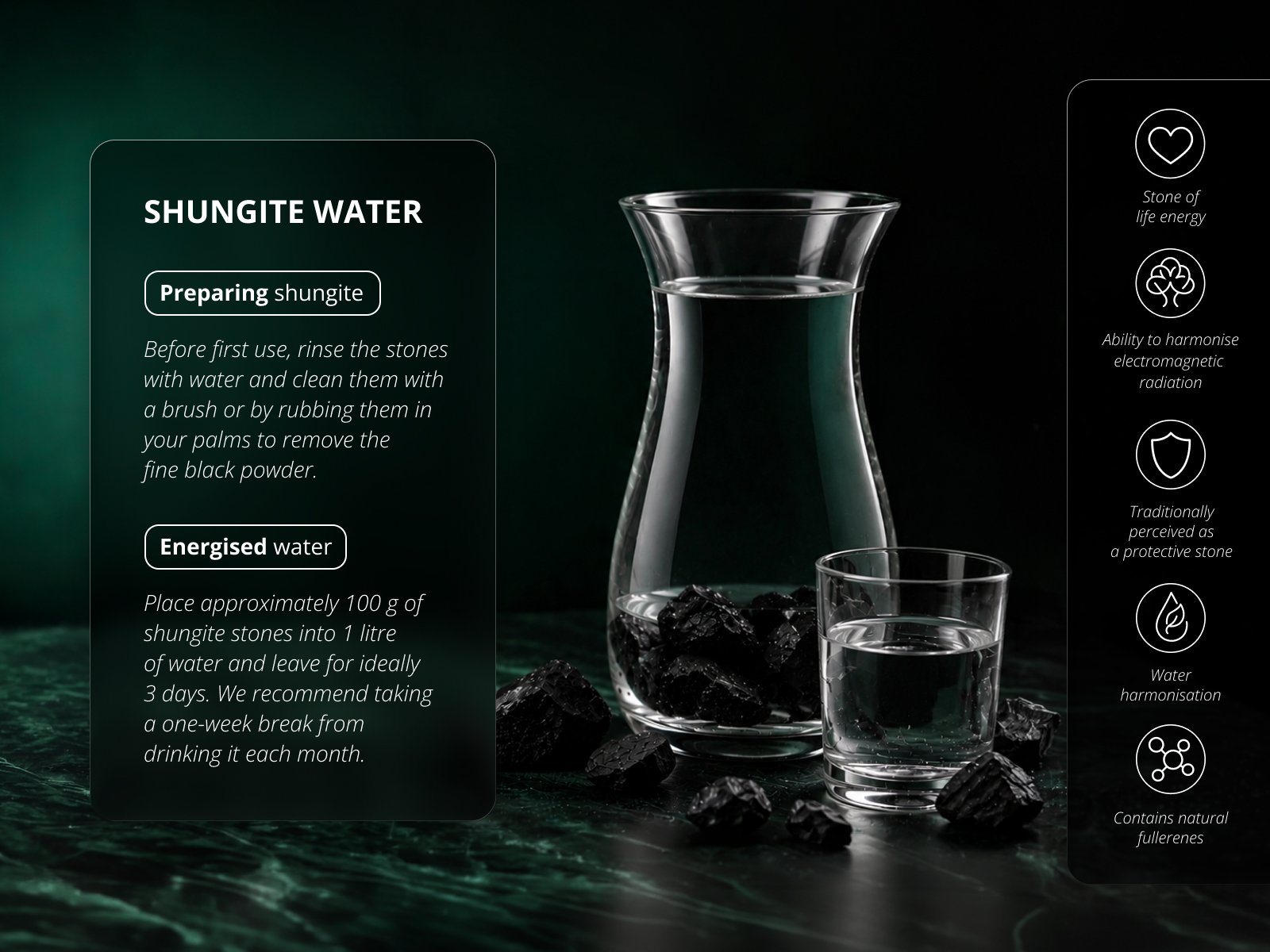
- It enriches water with sodium, potassium, calcium, magnesium and other
minerals and natural antioxidants.
- Balances the pH of the water to between 7 and 7.5
- It is environmentally friendly and safe for human health.
- It is corrosion resistant.
Grounding stone with high vibration
Shungite is extremely grounding, it is stated that it can
help better integrate cosmic wisdom and karmic lessons as its high
vibration helps bring your spiritual body down to the
physical plane.
Shungite encourages you to learn more and continue towards further spiritual
growth. It is also associated with great cosmic mysteries and is said to
bring light in times of darkness or uncertainty.
Antioxidant, universal sorbent
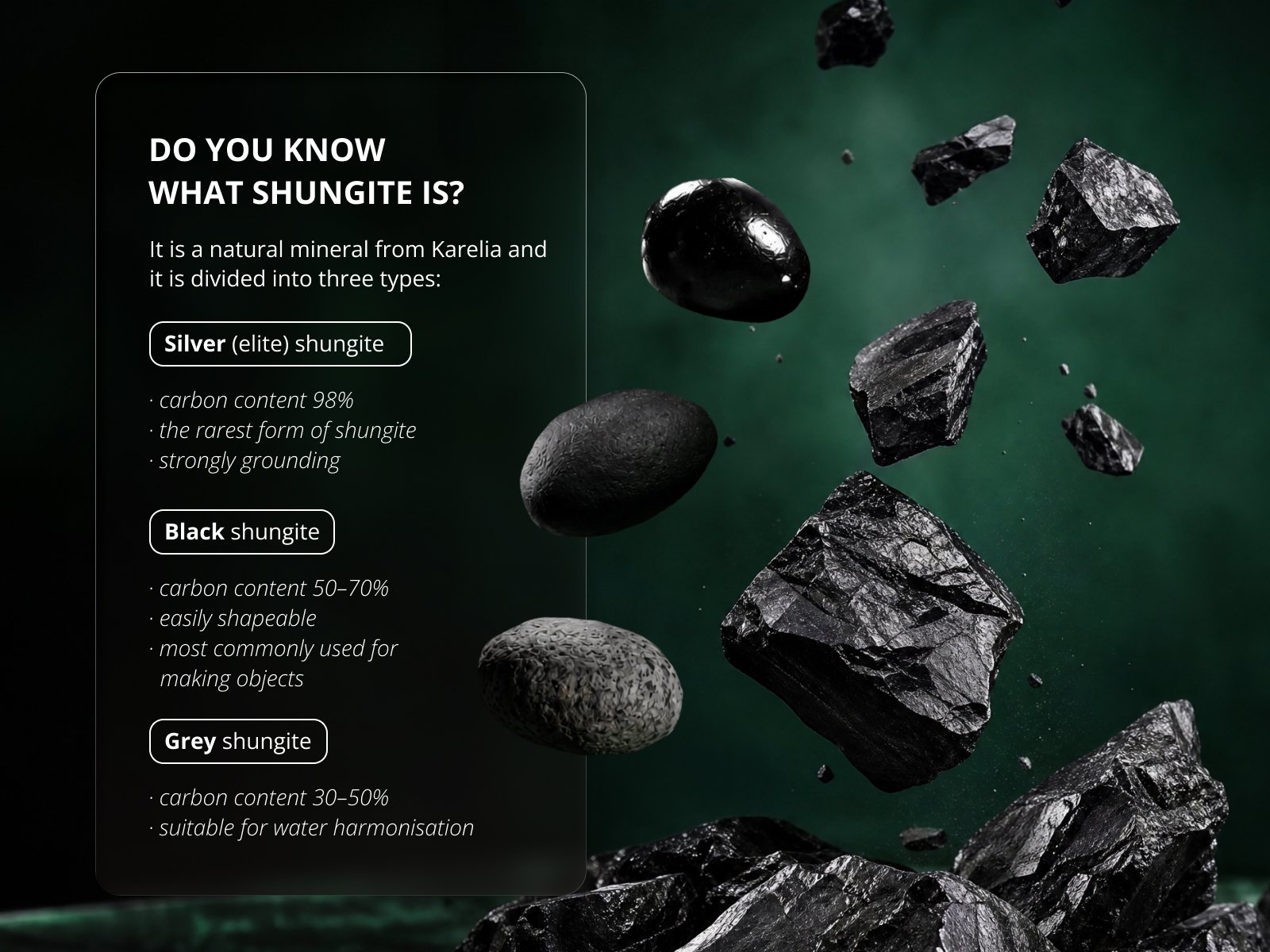
By virtue of its structure, shungite is a mineraloid, a non-porous
polymineral carbon rock, which contains nearly half of the
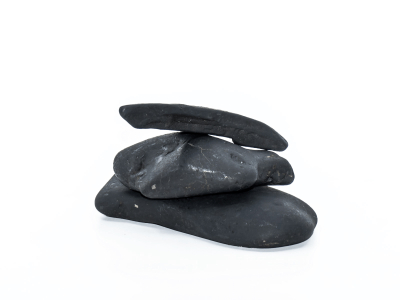
elements of the periodic table. To the eye, it is an opaque black
stone with a more or less pronounced metallic sheen. The age of
shungite is around 2 billion years. This fossilised natural
material from the seabed has an exceptional composition,
properties and a wide range of uses. Its unique hallmark is that it
contains non-crystalline carbon in the unusual form of
fullerenes. ** Fullerene** is the fourth known form of carbon
after diamond, graphene and carbon.
It is the most powerful known antioxidant and
universal sorbent.
History
Shungite got its name from its** place of occurrence, the Karelian
village of **Shunga on the shores of Lake Onega, where it was first
discovered.
Tsar Peter the Great used shungite for his army
Shungite has been used as a healing tool since the beginning of the
18th century. Tsar Peter the Great established the first
Russian baths in Karelia and also used the properties of shungite to
purify drinking water for his army.
Filters out electromagnetic and radio frequency radiation.
Initially it was mainly used as a substitute for coal coke in blast furnaces
for the production of cast iron. Subsequently, new valuable properties of
shungite were discovered – absorptive, bactericidal, catalytic, redox, as
well as the ability to filter out electromagnetic and radioactive radiation.
These properties have enabled the use of shungite in various areas of
science, industry and technology, and a number of new nanotechnological
materials have been developed based on it.
The properties of shungite have enabled its use in water treatment
and purification technology. Water treatment and filtration with
shungite is widespread in Norway, Sweden and America. It is used to
purify water in wells, reservoirs, swimming pools and for the treatment
of wastewater from hospitals.
Northwest Russia is the largest and oldest source of
shungite, with other deposits reported in Austria, India, Kazakhstan and
the Congo.
Country of origin
Karelia






 Български
 Čeština
 Deutsch
 Eesti
Eesti
 Español
 Français
 Hrvatski
 Italiano
 Latviešu
 Lietuvių
 Magyar
 Nederlands
 Norsk
Norsk
 Polski
 Português
 Română
 Русский
 Slovenčina
 Slovenščina





 HU (
HU (
 RO (
RO (