History
Blackberry as one of the strongest plants in the world
Black cumin, also known as black cumin, is a herb with a long
history. Recipes or the actual effects related to this
"heavenly herb " can be found in the ancient writings of
Chinese and Tibetan medicine. By Ayurvedic physicians, black cohosh is even
considered one of the most powerful plants in the world.
Black Gold of the Pharaohs
The dark oil extracted from the seeds of this plant was especially valued in
ancient Egypt for its beneficial effects. It was an
indispensable part of beauty rituals for Cleopatra and
Hippocrates himself praised its therapeutic properties. Black cumin oil
was thus a literal luxury item, earning it the name Black Gold
of the Pharaohs.
Origin and cultivation
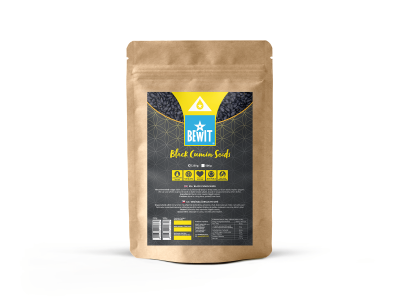
Fine black seeds are the raw material for oil production
The black-eyed Susan is an annual herb native to Southeast Asia, where it
still thrives today. It grows up to 60 cm tall and blooms showy yellow,
pink or light blue flowers. The fruits of the blackberry are large
swollen capsules containing tiny black seeds. These are harvested when
fully ripe and are the raw material for the production of black
cumin oil.
Composition and properties
It is an edible, single-species oil of a thicker consistency, containing
mainly unsaturated fatty acids. Thanks to its substances, the oil has a darker
colour and a more pronounced aroma, which is its uniqueness.
Cold pressing preserves the maximum amount of beneficial substances
in the oil
We adjust the oil pressing process so that the temperature of the
pressed oil is close to 42°C during production. This prevents the loss
of heat-labile substances and unnecessary deterioration of the resulting oil.
The oil is therefore a RAW, cold-pressed oil.
Oil is produced in our production plant
We produce black cumin oil with care and love in our production plant in
Ostrava. The seeds are native to India.
Instructions for use
Spicy and slightly spicy taste, which can be used to
flavour salads
Black cumin seed oil is typical for its spicy and slightly spicy taste. It is
reminiscent of the spice of the same name. It can be used to flavour
various types of salads, vegetable or meat dishes. However, in
order to preserve all the substances it contains, we recommend serving this oil
only with cold or chilled food.
Note
This is unfiltered oil, any sludge is not a problem. On the contrary, it
confirms the quality and production process without refining.
Fatty acid content
Palmitic acid 11,2 g/100 g
Stearic acid 2,9 g/100 g
Oleic acid 22,5 g/100 g
Linoleic acid 53.9 g/100 g
Omega 3 0,4 g/100 g
Omega 6 56,5 g/100 g






 Български
 Čeština
 Deutsch
 Eesti
Eesti
 Español
 Français
 Hrvatski
 Italiano
 Latviešu
 Lietuvių
 Magyar
 Nederlands
 Norsk
Norsk
 Polski
 Português
 Română
 Русский
 Slovenčina
 Slovenščina