History
Uncaria is one of the most famous creeping plants found in the Peruvian
Andes. Depending on the effects found, Uncaria has become an integral part of
traditional Peruvian medicine, which for 2,000 years has played an important
role in solving various ailments, not only among indigenous tribes. According to
Indian tradition, this powerful plant was even considered the „sacred plant of
the Incas“. In the past, Uncaria bark was mainly used by the indigenous
population, which did not mean such a great loss for the rainforest. Over time,
however, the demand for this plant has multiplied significantly due to its
observed effects. Nevertheless, the Peruvian government intervened early on and
imposed annual limits. The limits set regulate the extraction of Uncaria and
thus prevent its extinction.
Origin and cultivation
Uncaria originates in Peru, specifically in the Peruvian Andes. It can be
found in the local rainforests because it grows exclusively in soil rich in
organic nutrients and requires relatively high humidity. Green rainforests full
of swamps and diverse vegetation are simply indispensable for this climbing
plant. Uncaria cannot be grown in the field or in a greenhouse, which is why it
is so rare. It is a woody climbing liana with visible woody spines or
„claws“ on its stem. The plant uses its claws to grip the trunks of trees it
climbs, without causing any harm to them. The individual spines resemble cat
claws in appearance and function. Thus, Uncaria is often referred to as
cat's claw. It can grow up to 30 m in length over decades. Its bark, from
which the resulting powder is obtained, is especially valued for its beneficial
effects.
Ingredients and properties
The uniqueness of Vilcacora lies in its exceptional composition. Uncaria is
an important source of a wide range of phytochemicals, which are contained in
the bark of this plant. Vilcacora is made from the outer part of the bark.
Use
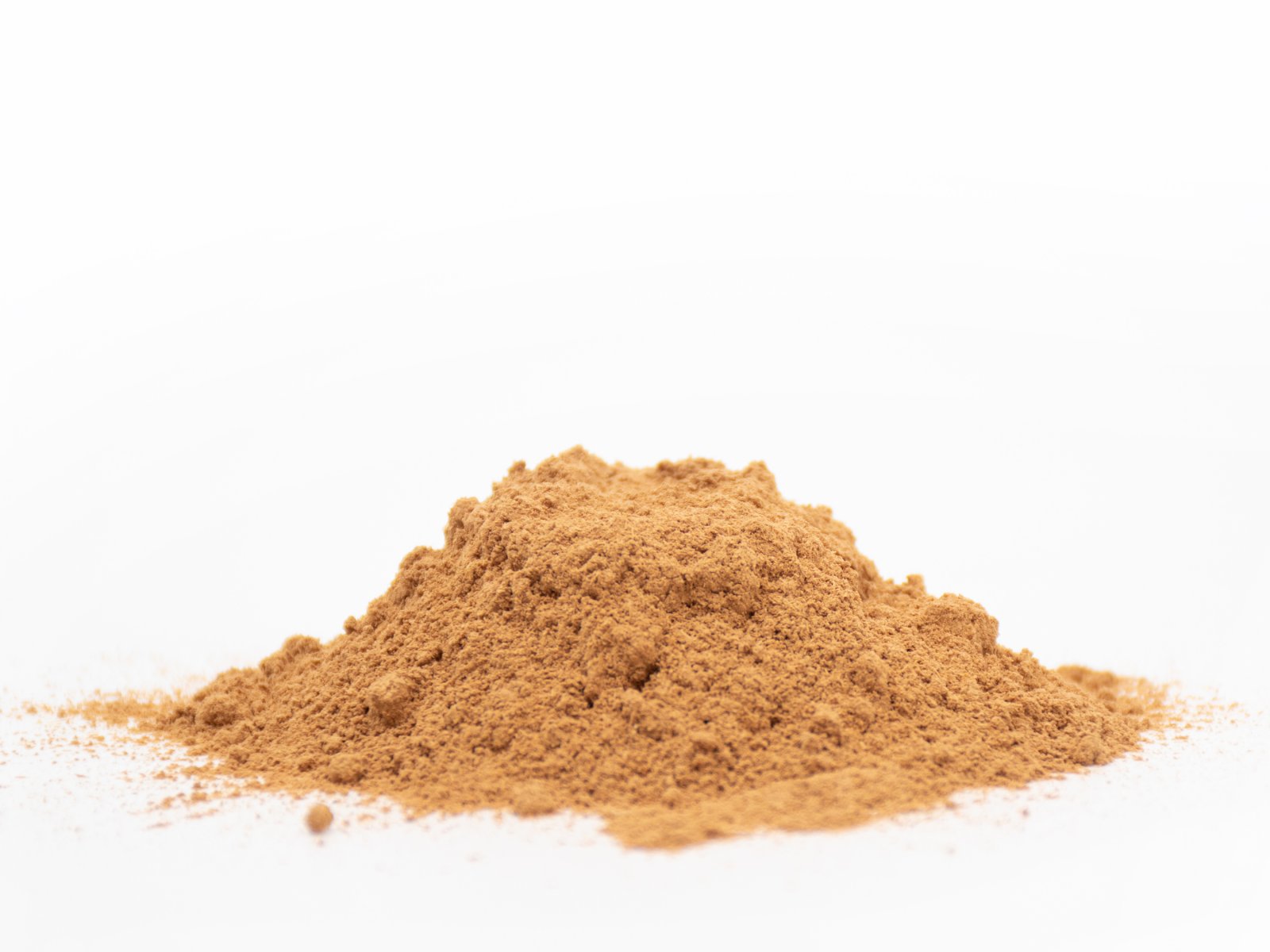
It is a fine brown powder that is only partially soluble in water. The daily
recommended dose of Vilcacora powder is 9–11 g (1 tbsp). A spoonful of
Vilcacora can be mixed in water, milk, smoothies or various fruit juices. You
can also add it to breakfast porridge, cereals or other dishes.
Recommended dosage
Stir 1 tablespoon (9–11 grams) daily in water, juice, milk, porridge,
smoothies, cereal or other foods. Daily intake of the Uncaria tomentosa:
9–11 g.
Warning
- Do not exceed the recommended daily dose.
- This product is not intended to replace a varied and balanced diet.
- Keep out of reach of children.
- Not suitable for children under 3 years of age or pregnant and
lactating women.
- Store dry, protect from heat.
It is not recommended to take Vilcacora before or after organ
transplantation.
Finally
- 100% pure and natural ingredients.
- Suitable for vegans and vegetarians
Packaging
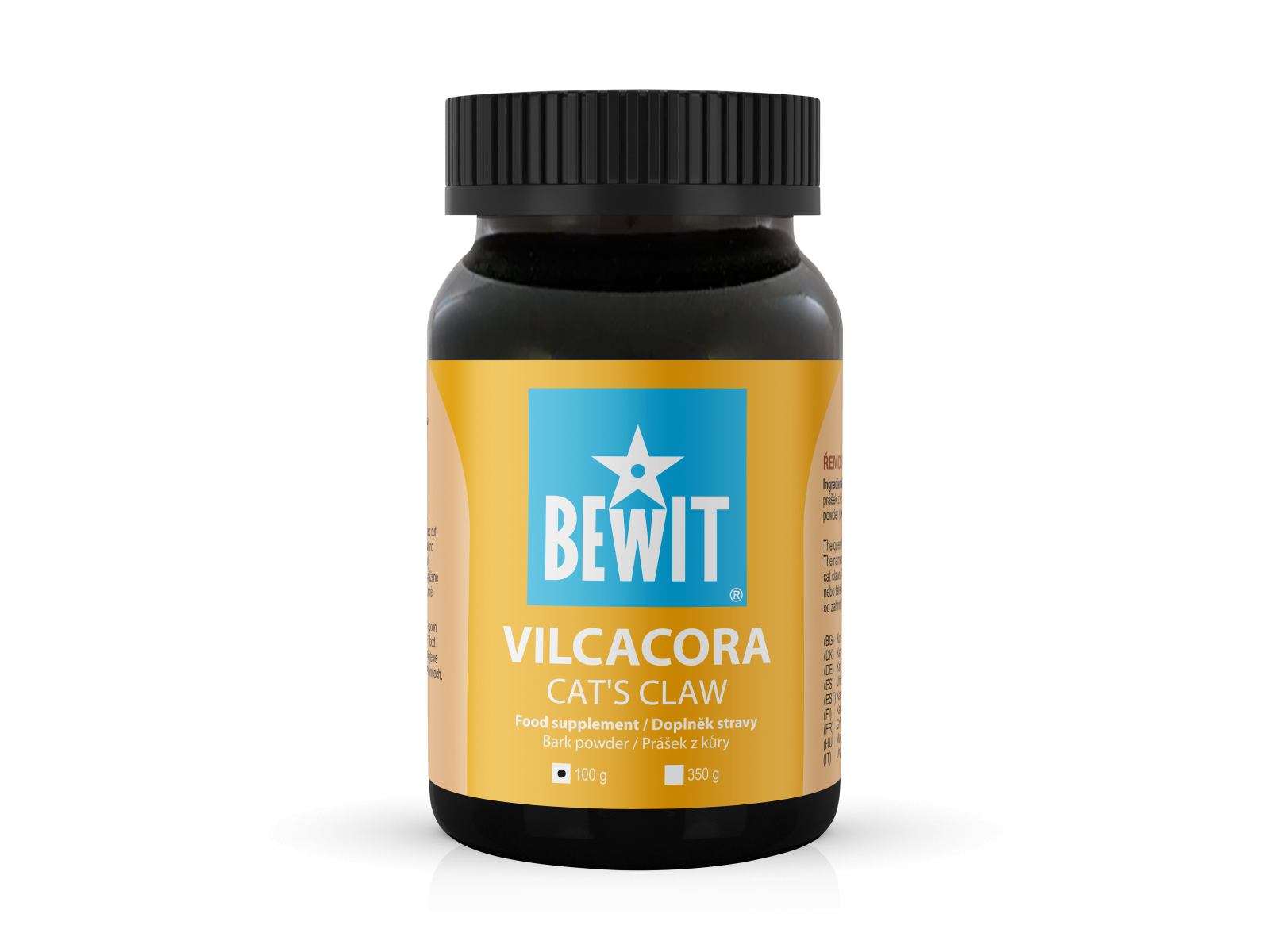
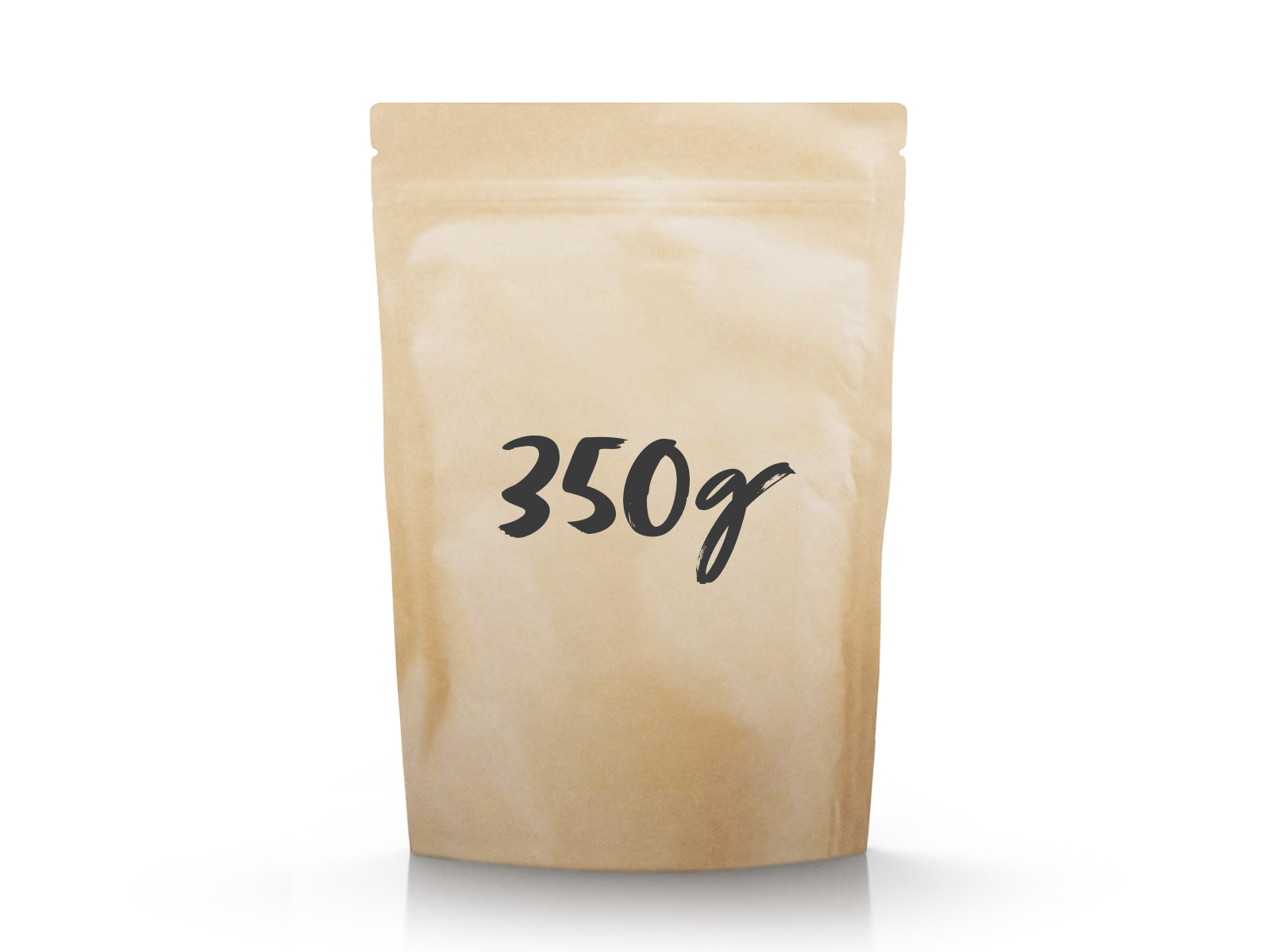
You can choose from two packaging options:
- 350 g in a paper bag
- 100 g in a glass bottle
Country of origin: Peru
Sources
[1] CRISTINA GOMES HONÓRIOI, Isabela, Bianca WALÉRIA BERTONIII a Ana MARIA
SOARES PEREIRAII, 2016. Uncaria tomentosa and Uncaria guianensis an agronomic
history to be written. Ciência Rural. 46(8), 1401–1410. ISSN Maria Soares
PereiraII.
[2] EL-SABER BATIHA, Gaber, Amany MAGDY BESHBISHY a Lamiaa WASEF,
2020. Uncaria tomentosa (Willd. ex Schult.) DC.: A Review on Chemical
Constituents and Biological Activities. Applied sciences. 10(8), 7–12.
[3] ROJAS-DURAN, R., G. GONZA a C. RUIZ-MARTEL,
2012. Anti-inflammatoryactivityofMitraphyllineisolatedfrom Uncaria
tomentosa bark. Journal of Ethnopharmacology. 143(3), 801–804.
[4] REICH, A. et al., 2020. A spray containing extracts of oat plantlets
and Uncaria tomentosa relieves pain associated with chronic inflammatory skin
diseases and dermatological procedures. Original article. 34(2), 3–11.
[5] CESTARI AZEVEDOA, Bruna, Lucas JUNQUEIRA FREITAS MORELA a Fábio
CARMONAB, 2018. Aqueous extracts from Uncaria tomentosa (Willd. ex Schult.) DC.
reduce bronchial hyperresponsiveness and inflammation in a murine model of
asthma. Journal of Ethnopharmacology. 76–89.
Health claims from the so-called ON HOLD list
• Normal joint condition
• Natural immunity – immune system
ON HOLD list – This is a list of substances and their relationship to
health that have been sent to EFSA for assessment but EFSA has not yet issued an
expert opinion or the EC has not yet issued a decision. Please note that these
claims are temporary.





 Čeština
 Français
 Български
 Nederlands
 Norsk
Norsk
 Italiano
 Română
 Slovenščina
 Slovenčina
 Deutsch
 Polski
 Hrvatski
 Español
 Magyar
 Pусский













 CS (
CS ( RO (
RO ( SK (
SK (
 PL (
PL (