Historie
Z Ameriky do jižní Evropy a dále do celého světa
Slunečnice je celosvětově proslulá zemědělská plodina, která
se pěstuje zejména pro její olejnatá semena.
Z dochovaných písemností vyplývá, že se slunečnice pěstovaly už před
5000 lety domorodými Američany. Na počátku 16. století se díky
španělskému průzkumníkovi Monardesemu semena těchto rostlin dostala do
jižní Evropy. A odtud následně do celého světa.
Olej získávaný ze semen této rostliny se už mnoho let těší velké
oblibě. Své široké využití si vysloužil zejména pro svou jemnou
chuť a vysokou stabilitu. Na hodnotě mu bezesporu přidávají také
přirozeně přítomné fytonutrienty a esenciální mastné kyseliny. Díky
všem svým benefitům se slunečnice řadí do skupiny
nejdůležitějších pěstovaných olejnin na světě.
Původ a pěstování
Slunečnici pro svou velikost a barvu rozhodně
nepřehlédnete
Slunečnice obecná je rostlinou, kterou pro její robustní vzrůst a
zářivě žluté okvětní lístky rozhodně nepřehlédnete. Většinu času
její květy míří vzhůru a otáčejí se za sluncem. Později, ve stádiu
své plné zralosti, hlavy květů ztěžknou a skloní se k zemi. Takto
zralá, ve středech květů soustředěná slunečnicová semena se
zbavují slupek a lisují se na výsledný slunečnicový olej.
Složení a vlastnosti
Žlutá barva a charakteristicky jemná chuť. ALE
BEZ VŮNĚ
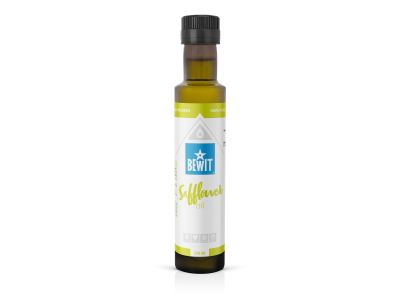
Jednodruhový, BIO certifikovaný slunečnicový olej má světle až tmavě
žlutou barvu a charakteristickou jemnou chuť.
Slunečnicový olej se získává šetrným lisováním za studena a
následně se podrobuje tzv. dezodorizaci. Díky tomu má neutrální vůni =
olej je bez zápachu. Zmíněné procesy probíhají opět šetrným
způsobem, které ve výsledném oleji zachovávají maximální množství
vitamínů, minerálů a tělu prospěšných látek. Významný je také
vysoký obsah známého antioxidantu – v tuku rozpustného
vitamínu E.
Ve slunečnicovém oleji najdete převážně nenasycené mastné
kyseliny, které tvoří až 93 % celkového složení.
Způsob výroby
Lisovaný za studena, deodorizovaný – olej získaný ze
semen nebo plodů za teploty nepřekračující 40°C. Vhodný pro studenou
kuchyni.
Použití
Slunečnicový olej je základní potravinou vaší
domácnosti
Slunečnicový olej můžete pro jeho vysokou stabilitu používat nejen ve
studené, ale také v teplé kuchyni. Je vhodný na vaření, pečení
i na smažení. Pro svou jemnou chuť a neutrální
vůni se hodí jak do slaných, tak i sladkých jídel.
Benefity
- 100% přírodní, BIO kvalita
- Šetrný způsob zpracování (zachováno max. množství vitamínů,
minerálů, oxidantů a dalších tělu prospěšných látek)
- „Olej s vysokým obsahem kyseliny olejové“ (díky zastoupení
mononenasycených mastných kyselin) – mnohem vyšší termo-oxidační
stabilita
ZEMĚ PŮVODU
Slovensko
Zdroje
PARK, Brian a John M. BURKE. Phylogeography and the Evolutionary History of
Sunflower (Helianthus annuus L.): Wild Diversity and the Dynamics of
Domestication. Genes. 2020, 11(1), 266.
A. WHITE, DANIEL, IAN D. FISK, SAKUNKHUN MAKKHUN a DAVID A. GRAY. In Vitro
Assessment of the Bioaccessibility of Tocopherol and Fatty Acids from Sunflower
Seed Oil Bodies. Journal of Agricultural and Food Chemistry. 2009, 57(13),
5720–5726.
MUHAMMAD ANJUM, Faqir, Muhammad NADEEM, Muhammad ISSA KHAN a Shahzad HUSSAIN.
Nutritional and therapeutic potential of sunflower seeds: a review. British Food
Journal. 2012, 114(4), 544–552.
BOCKISCH, Michael. Fats and Oils Handbook [online]. 1. AOCS, 1998 [cit.
2020–12–07]. Dostupné z: https://app.knovel.com/…ce-sunflower





 Български
 Deutsch
 Eesti
Eesti
 English
 Español
 Français
 Hrvatski
 Italiano
 Latviešu
 Lietuvių
 Magyar
 Nederlands
 Norsk
Norsk
 Polski
 Português
 Română
 Русский
 Slovenčina
 Slovenščina









 CS
CS



 SK (
SK (
 RO (
RO (
 HU (
HU (